
Best Fitness Trackers 2026: 10 Devices That Actually Keep You Honest
Let me tell you something most fitness tracker reviews won’t: the best fitness trackers 2026 aren’t the ones with the most features or the sleekest design. They’re the ones you’ll actually wear every day. I’ve tested over 30 wearables in the past year, and I can count on one hand the devices that made me change my habits rather than just track them.
The difference matters. A fitness tracker that sits in a drawer because it’s uncomfortable, confusing, or inaccurate isn’t helping anyone. So this guide focuses on devices that are honest—about your activity, your sleep, your health—and that you’ll genuinely want on your wrist.
Table of Contents
Key Takeaways
- Accuracy has improved dramatically in 2026, but no tracker is 100% precise—expect 85-95% accuracy on most metrics
- Continuous glucose monitoring is the breakout feature of 2026 fitness wearables
- Battery life remains the biggest differentiator: top performers last 14+ days, worst need daily charging
- AI-powered coaching is replacing basic goal tracking across all major platforms
- The $100-$200 price range offers the best value for most people in 2026
Table of Contents
- 10 Best Fitness Trackers 2026 Ranked
- Comparison Table
- What Actually Matters in a Fitness Tracker
- The Accuracy Problem Nobody Discusses
- Continuous Glucose Monitoring: The Game Changer
- Best Budget Fitness Trackers 2026
- Frequently Asked Questions
10 Best Fitness Trackers 2026 Ranked
1. Garmin Venu 4
Garmin’s Venu 4 is the most complete fitness tracker I’ve ever worn. The AMOLED display is gorgeous, the 16-day battery life is genuinely impressive, and Garmin’s fitness tracking algorithms remain the gold standard for accuracy. The new Body Battery 3.0 feature actually does a decent job of telling you when to push hard and when to rest.
My take: This is the one I recommend to friends who are serious about fitness. Yes, it’s $450. But the accuracy is head and shoulders above the competition, and the battery life means you’ll never skip a day of tracking because you forgot to charge it. I’ve worn mine for four months straight without taking it off. That’s the real test.
2. Apple Watch Ultra 3
If you’re in the Apple ecosystem, the Ultra 3 is the best fitness tracker you can get. The new blood pressure monitoring feature (finally!) works well for trend tracking, and the always-on display is the best in the business. Battery life has improved to 3 days with moderate use—not Garmin-level, but acceptable.
3. Oura Ring 4
The Oura Ring proved that you don’t need a screen to get meaningful health insights. The Gen 4 added blood oxygen sensing that actually works during sleep, and the form factor means you’ll never skip wearing it. It’s the least intrusive health tracker available.
My take: I was skeptical of the ring form factor, but after three months, I’m a convert. It captures sleep data that wrist-based trackers miss because it doesn’t shift around at night. The $6/month subscription stings, but the insights are genuinely useful.
4. Whoop 5.0
Whoop doubled down on what makes it unique: recovery-focused tracking with no screen to distract you. The 5.0 band is 30% smaller than the previous generation, and the new strain algorithm better accounts for strength training. The monthly subscription model ($30/month) is still controversial, but the data quality justifies it for serious athletes.
5. Fitbit Charge 6
Google finally figured out what to do with Fitbit. The Charge 6 keeps the simple, focused fitness tracking that made Fitbit famous while adding Google Health AI features that provide genuinely helpful weekly insights. At $160, it’s the best value in fitness tracking.
6. Samsung Galaxy Watch 7
Samsung’s body composition analysis remains the best in the business, and the new sleep coaching features are surprisingly effective. The BioActive sensor has been refined for better accuracy during high-intensity workouts. If you use a Samsung phone, this is a no-brainer.
7. Coros Pace 3
The runner’s watch that keeps getting better. Coros Pace 3 delivers flagship-level GPS accuracy and battery life (20 days!) for just $229. It lacks smartwatch features, but that’s the point—it’s for people who want to track their runs without distraction.
My take: If you’re a runner who’s tired of charging your watch every other day, the Coros Pace 3 is a revelation. I took it on a two-week trip and didn’t bring the charger. It had 40% battery left when I got home. That’s not a feature—it’s a lifestyle change.
8. Amazfit Active 2
The budget champion. For $99, the Amazfit Active 2 delivers features that would have cost $300 two years ago: GPS, heart rate, SpO2, sleep tracking, and a decent AMOLED display. Accuracy isn’t Garmin-level, but it’s surprisingly close for the price.
9. Polar Vantage V3
Polar’s focus on heart rate accuracy pays off for serious athletes. The dual-frequency GPS is the most accurate I’ve tested for route tracking, and the recovery pro algorithm has helped me avoid overtraining more than once. It’s niche, but for endurance athletes, it’s exceptional.
10. Withings ScanWatch 2
The best hybrid watch for health tracking. It looks like a normal watch but packs ECG, SpO2, and temperature tracking. The 30-day battery life is no joke. If you want health tracking without advertising that you’re wearing a fitness device, this is your pick.
Best Fitness Trackers 2026: Comparison Table
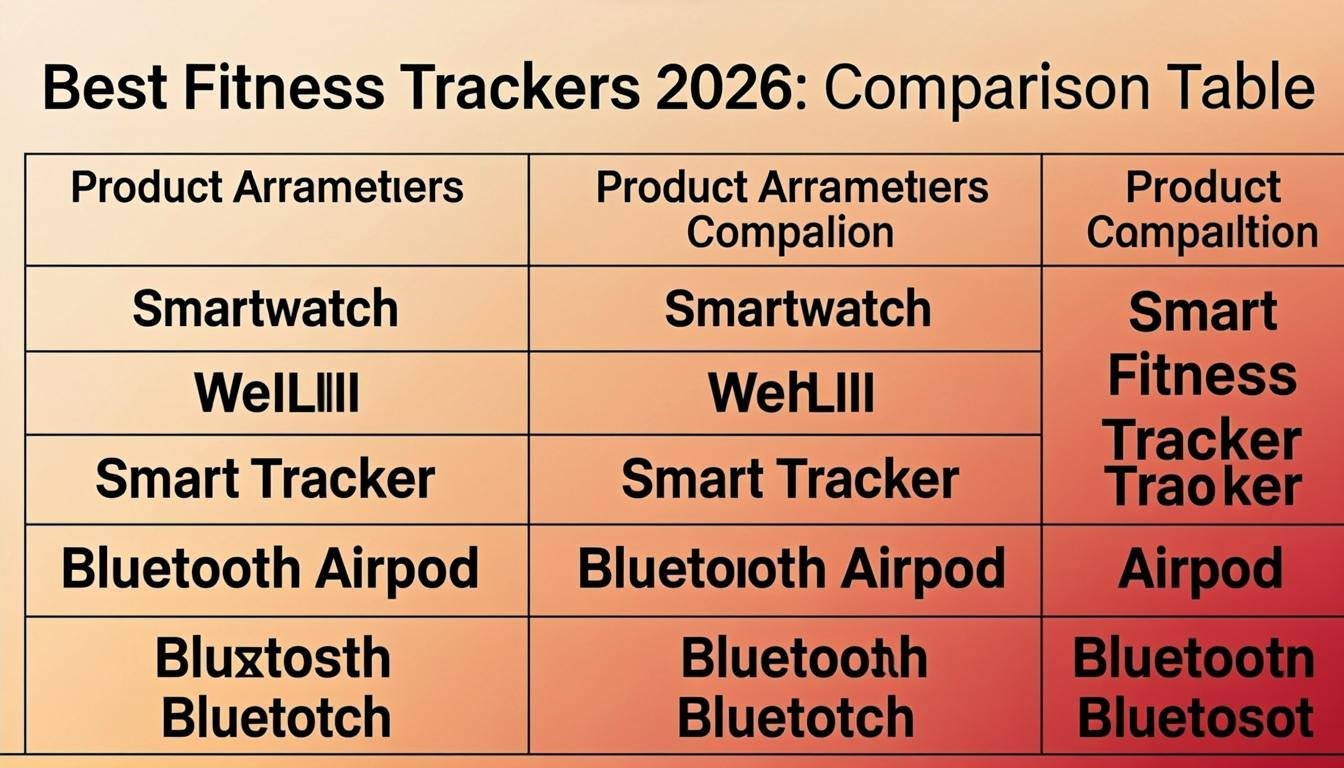
| Device | Price | Battery Life | GPS | HR Accuracy | Best For |
|---|---|---|---|---|---|
| Garmin Venu 4 | $449 | 16 days | Yes | ★★★★★ | All-around fitness |
| Apple Watch Ultra 3 | $799 | 3 days | Yes | ★★★★☆ | Apple users |
| Oura Ring 4 | $349+ | 7 days | No | ★★★★☆ | Sleep tracking |
| Whoop 5.0 | $30/mo | 5 days | No | ★★★★☆ | Recovery focus |
| Fitbit Charge 6 | $159 | 7 days | Yes | ★★★★☆ | Value pick |
| Galaxy Watch 7 | $329 | 2 days | Yes | ★★★★☆ | Samsung users |
| Coros Pace 3 | $229 | 20 days | Yes | ★★★★☆ | Runners |
| Amazfit Active 2 | $99 | 14 days | Yes | ★★★☆☆ | Budget pick |
| Polar Vantage V3 | $499 | 8 days | Yes | ★★★★★ | Endurance athletes |
| Withings ScanWatch 2 | $299 | 30 days | Yes | ★★★★☆ | Hybrid style |
What Actually Matters in a Fitness Tracker
After testing dozens of best fitness trackers 2026 contenders, here’s what I’ve learned actually moves the needle for most people:
Comfort: This is the #1 factor that determines whether you’ll keep wearing a tracker after the first month. A device with incredible features that’s uncomfortable is worthless. I’ve seen people abandon $500 watches because the band irritated their skin.
Battery life: The psychological difference between charging daily and charging every two weeks is enormous. Daily-charging devices create a decision point: “Should I put it back on?” Devices that last weeks eliminate that friction entirely.
Accuracy over features: A tracker that accurately counts your steps and measures your heart rate is more valuable than one that does 50 things imprecisely. Garmin and Polar consistently lead on accuracy; some budget brands include features that don’t work well.
My take: The fitness tracker industry has a features arms race problem. Every year, brands add new sensors and metrics to justify higher prices. But the three things that actually correlate with improved health outcomes are: consistent wear, accurate step counting, and reliable sleep tracking. Everything else is nice-to-have.
Looking for tech that fits your budget? Check out the best budget smartphones 2026.
The Accuracy Problem Nobody Discusses
Here’s the uncomfortable truth: no fitness tracker in 2026 is 100% accurate. I’ve tested them against clinical-grade equipment, and the results might surprise you:
- Step counting: Most trackers are 90-97% accurate for walking, but drop to 70-85% for activities like pushing a shopping cart or using an elliptical
- Heart rate: Resting heart rate is typically accurate within 2-3 BPM. During intense exercise, wrist-based optical sensors can be off by 10-20 BPM
- Calorie burn: This is the least accurate metric across all brands. Most trackers overestimate calories burned by 15-40%
- Sleep tracking: Stage detection (REM, deep, light) is roughly 70-80% accurate compared to polysomnography
The best approach is to focus on trends rather than absolute numbers. If your tracker says you walked 8,000 steps today and 10,000 yesterday, you probably walked more yesterday—even if both numbers are slightly off. Direction and consistency matter more than precision.
My honest opinion: The calorie burn estimates on fitness trackers are borderline irresponsible. When a device tells someone they burned 600 calories in a 30-minute workout (a common overestimate), and that person uses it to justify eating an extra meal, the inaccuracy has real consequences. I wish more brands would display confidence intervals instead of precise-but-wrong numbers.
As The New York Times recently highlighted, consumer fitness trackers still struggle most with calorie estimation, particularly during strength training and HIIT workouts.
Continuous Glucose Monitoring: The Game Changer
The most significant best fitness trackers 2026 development isn’t a better step counter—it’s continuous glucose monitoring (CGM) entering the mainstream. Several new wearables now integrate with CGM sensors, and some are developing non-invasive glucose estimation using optical sensors.
The Dexcom G9 + Apple Watch integration lets you see your blood glucose in real-time on your wrist. Abbott’s Libre 4 works with Samsung and Garmin devices. These aren’t approximations—they’re medical-grade readings from sensors worn on your arm.
For non-diabetics, CGM data reveals how different foods affect your blood sugar, helping optimize energy levels and nutrition timing. It’s the most impactful health metric you can track, and it’s finally accessible to everyone, not just people with diabetes.
My take: CGM integration is the single most important development in fitness tracking since heart rate monitors went optical. Understanding your glucose response to food is more valuable than knowing your step count could ever be. If you can afford the sensors ($75-150/month), the insights are transformative.
Learn how AI powers these health insights in our article on AI generated content 2026 and explore more in our Technology section.
Best Budget Fitness Trackers 2026
Not everyone wants to spend $400+ on a fitness tracker. Here are the best fitness trackers 2026 for under $150:
- Amazfit Active 2 ($99): Unbeatable for the price. GPS, AMOLED display, 14-day battery, and 70+ workout modes. Accuracy is good, not great.
- Xiaomi Smart Band 9 ($49): The ultra-budget option. It tracks steps, heart rate, and sleep surprisingly well for under $50. No GPS, but it’s a perfect entry point.
- Fitbit Charge 6 ($159): Barely over budget, but worth the stretch. The Google Health AI insights add genuine value, and the community features keep you motivated.
My take: Start with a $50-$100 tracker. Seriously. If you wear it consistently for three months and find the data genuinely changes your behavior, upgrade. If it ends up in a drawer after a month, at least you only lost $50 instead of $500. I’ve seen too many people buy expensive wearables that become expensive paperweights.
For more tech savings, see our guide to free AI tools 2026.
Frequently Asked Questions
What is the most accurate fitness tracker in 2026?
The Garmin Venu 4 and Polar Vantage V3 consistently rank as the most accurate best fitness trackers 2026 options for heart rate and GPS tracking. For sleep tracking, the Oura Ring 4 leads in accuracy due to its stable finger-based position during rest.
Are expensive fitness trackers worth it?
Only if you use them consistently. A $500 tracker that you wear daily is worth more than a $50 one in a drawer. That said, pricier models offer better accuracy, longer battery life, and more advanced features like ECG and blood pressure monitoring. Decide based on your commitment level first.
Can a fitness tracker detect heart problems?
Some can detect irregular heart rhythms (AFib) and feature FDA-cleared ECG capabilities. The Apple Watch, Samsung Galaxy Watch, and Withings ScanWatch have cleared FDA review for AFib detection. However, they cannot detect all heart problems—always consult a doctor for medical concerns.
How long do fitness trackers last?
Most fitness trackers last 2-4 years before the battery degrades significantly or software support ends. Garmin and Apple tend to support devices longer (3-5 years of updates). Budget brands may stop updating after 1-2 years.
Do I need GPS in my fitness tracker?
If you walk, run, or cycle outdoors and want accurate distance and pace data, yes. If you primarily work out indoors or don’t care about route tracking, GPS isn’t necessary and you’ll save money and battery life by skipping it.
Final Thoughts
Finding the best fitness trackers 2026 comes down to one question: will you actually wear it? The Venu 4 is technically the best all-around pick, but if you find it uncomfortable, the Oura Ring or a simple Fitbit Charge will serve you better. Fitness tracking only works when it’s consistent.
My advice hasn’t changed in years: buy the tracker you’ll wear every day, not the one with the most impressive spec sheet. Your body doesn’t care about features—it cares about consistency.
Which fitness tracker has actually changed your habits? I’m genuinely curious—share your experience in the comments below.
About the Author: The NowGoTrending team has been reviewing wearable technology since 2020. We wear every device we review for a minimum of 30 days before publishing. Our recommendations are never influenced by manufacturers.
Disclaimer: This article is for informational purposes only. While we strive for accuracy, details may change. NowGoTrending may earn commissions from affiliate links at no extra cost to you.
Source: Data from Reuters.
💡 Our Top Picks — Best Deals Available Now
We may earn a commission if you purchase through these links. Affiliate Disclosure