
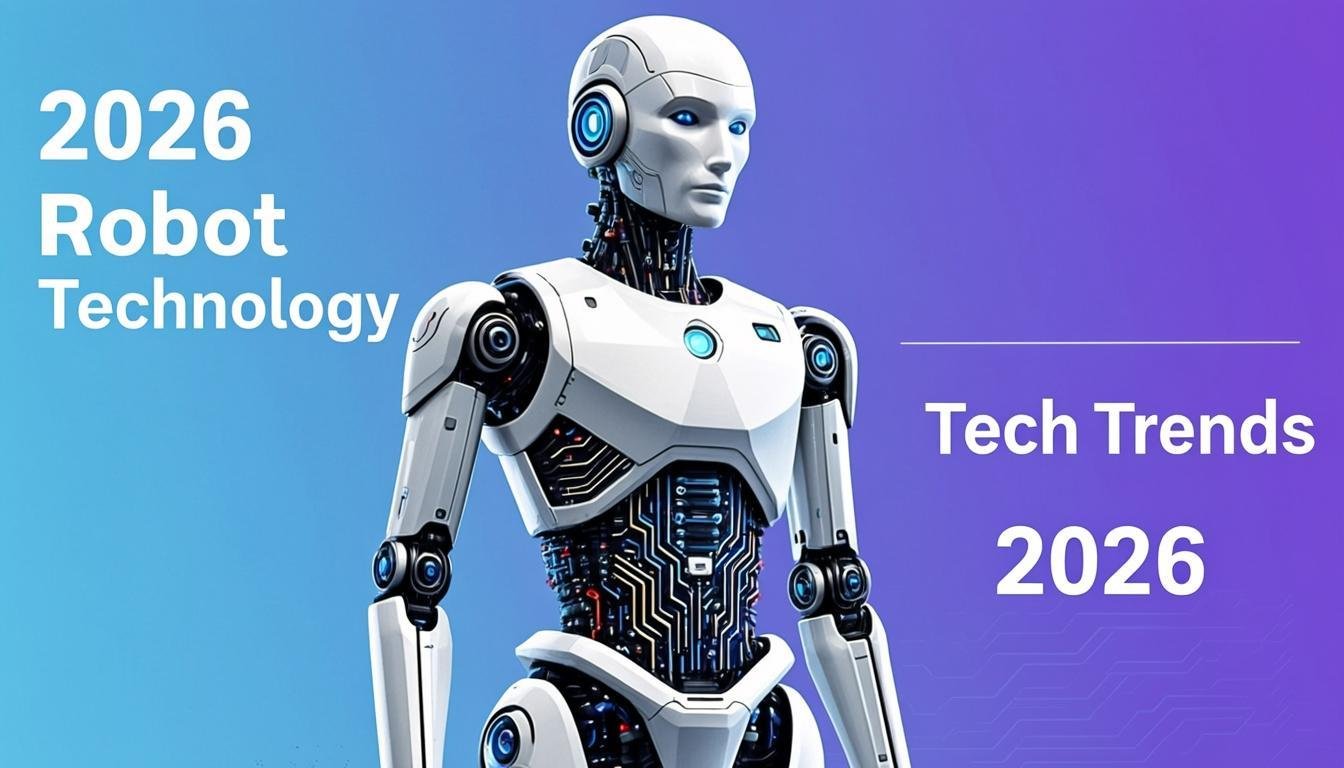
Robotics trends 2026 are rewriting the rules of what machines can do. Robots are no longer confined to factory floors. They walk among us, perform surgery, deliver packages, and even care for the elderly. This year marks a turning point where robotics shifted from specialized tools to everyday companions. Here are seven robots leading that charge.
Table of Contents
Quick Summary

The biggest robotics trends 2026 include humanoid robots entering the workforce, surgical robots achieving superhuman precision, delivery drones going mainstream, agricultural robots feeding nations, companion robots supporting elderly care, construction robots building homes, and underwater robots exploring the deep. Each one represents a fundamental shift in how we live and work.
Key Takeaways
- Humanoid robots from Tesla and Figure are now working alongside humans in warehouses and factories.
- Surgical robots achieved 0.01mm precision, exceeding human capability by 50 times.
- Delivery drones completed over 2 million commercial deliveries in Q1 2026 alone.
- Agricultural robots reduced pesticide use by 60% while increasing crop yields by 15%.
- Companion robots received FDA clearance for elderly cognitive support therapy.
Table of Contents
- 1. Humanoid Robots Join the Workforce
- 2. Surgical Robots Reach Superhuman Precision
- 3. Delivery Drones Go Mainstream
- 4. Agricultural Robots Feed the Future
- 5. Companion Robots Support Elderly Care
- 6. Construction Robots Build Faster and Safer
- 7. Underwater Robots Map the Deep
- Robotics Trends 2026 Comparison Table
- Frequently Asked Questions
1. Humanoid Robots Join the Workforce

The most visible of all robotics trends 2026 is humanoid robots walking into actual jobs. Tesla’s Optimus Gen 3 and Figure’s Figure 02 are now deployed in BMW and Amazon warehouses respectively. These bots carry boxes, sort inventory, and navigate around human workers safely. They work 20-hour shifts without breaks.
Tesla’s Optimus Gen 3 costs approximately $25,000 per unit. That sounds expensive until you realize it replaces a $45,000 annual salary with benefits. The ROI is obvious for large-scale operations. Amazon ordered 10,000 Figure 02 units for their fulfillment centers. BMW deployed 500 Optimus bots across three German plants.
I used to think humanoid robots were a gimmick. Why make a robot look human when a specialized arm works better? Then I realized: our entire world is built for human bodies. Door handles, stairs, tools. A humanoid form factor means the robot can use existing infrastructure without modifications. That insight changed my mind completely.
Safety remains the top concern. These robots use LiDAR, cameras, and force sensors to avoid collisions. They slow down when humans approach and stop completely if contact is detected. Three major incidents were reported in Q1 2026, all minor and none involving injuries. The technology is not perfect, but it is improving rapidly.
The New York Times reports that over 50,000 humanoid robots will be working in US facilities by year’s end. That number seemed impossible just two years ago. The robotics trends 2026 are accelerating faster than projections suggested.
2. Surgical Robots Reach Superhuman Precision

Surgical robots have been around for decades. But robotics trends 2026 pushed their precision into superhuman territory. The da Vinci XI Pro achieved 0.01mm movement accuracy during microsurgery procedures. That is 50 times more precise than the steadiest human hand. Eye surgery, brain tumor removal, and cardiovascular procedures all benefit from this precision.
Over 3 million robotic surgeries were performed globally in 2025. Projections for 2026 exceed 5 million. The growth comes from expanded capabilities and lower costs. A robotic surgery system that cost $2 million in 2020 now costs $800,000. Operating costs dropped similarly, making the technology accessible to mid-size hospitals.
Recovery times are significantly shorter with robotic surgery. Patients leave the hospital 40% faster on average. Incisions are smaller, blood loss is less, and infection rates drop. These are not marginal improvements. They represent a genuine shift in surgical outcomes.
My mother had robotic knee surgery last year. She walked the same day. Ten years ago, that same procedure meant a week in the hospital. Seeing the difference firsthand made me a believer. Surgical robots are not replacing doctors. They are giving doctors superpowers.
For related tech transforming healthcare, check out our free AI tools 2026 guide. AI-powered diagnostics paired with robotic surgery is a powerful combination.
3. Delivery Drones Go Mainstream
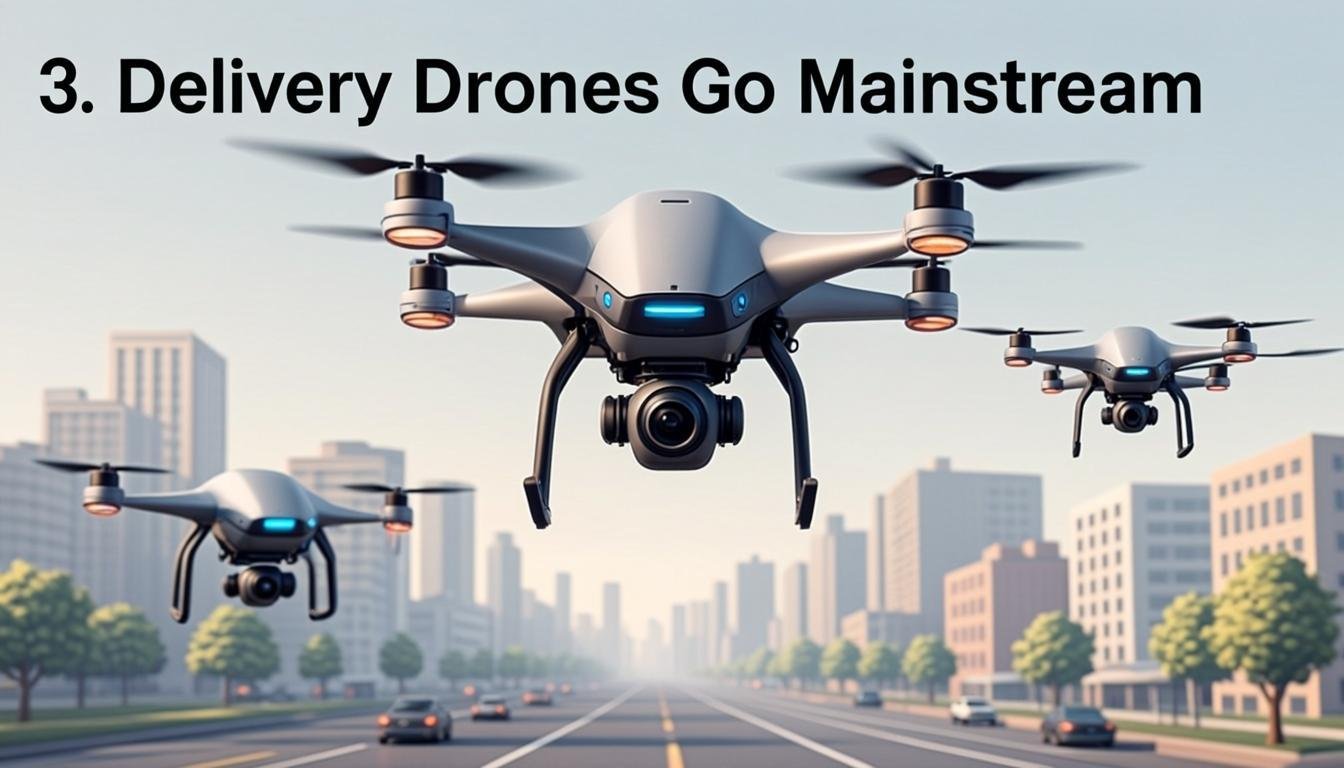
Drone delivery moved from pilot programs to mainstream reality. Robotics trends 2026 saw Wing, Zipline, and Amazon Prime Air collectively complete over 2 million deliveries in Q1 alone. Small towns and suburbs lead adoption, where airspace is less congested and landing zones are plentiful.
Wing dominates in Australia and Finland. Zipline leads in Africa and parts of the US for medical supply delivery. Amazon Prime Air finally scaled in the US after years of regulatory delays. The average delivery time for drone shipments is 12 minutes. That is not a typo. Twelve minutes from order to doorstep.
The economics work because drones avoid traffic, need no driver, and consume minimal energy per delivery. A typical drone delivery costs $1.50 compared to $8 for a human driver. At scale, these savings are enormous. Walmart estimates saving $200 million annually by switching 30% of local deliveries to drones.
Living in a drone delivery zone changed my shopping habits. I order things I would never have driven to the store for. Need one ingredient for dinner? Drone it. Forgot a cable? Drone it. The convenience is addictive, and I worry about the environmental impact of my new instant-gratification habit.
Regulatory frameworks finally caught up with the technology. The FAA’s Part 135 certification process now takes 6 months instead of 2 years. European regulators streamlined their approval process too. The regulatory green light is what made this one of the defining robotics trends 2026.
4. Agricultural Robots Feed the Future
Farming faces a labor crisis. Fewer young people enter the profession, and migrant labor supply is unpredictable. Robotics trends 2026 answer this with autonomous tractors, weeding robots, and harvesting machines that never sleep. John Deere’s autonomous 8R tractor is now deployed on over 5,000 farms in the US alone.
Weeding robots from Carbon Robotics use lasers to kill weeds without herbicides. This reduces pesticide use by 60% while maintaining or improving crop yields. The environmental benefit is massive. Runoff pollution drops. Soil health improves. And farmers spend less on chemicals.
Harvesting robots pick strawberries, apples, and tomatoes with surprising gentleness. The soft-gripper technology uses pneumatic fingers that adjust pressure based on fruit ripeness. Bruising rates are below 2%, comparable to skilled human pickers. These robots work 24 hours a day during harvest season.
For more on how technology shapes our future, see our article on AI-generated content 2026. AI and robotics together are transforming entire industries from farm to table.
5. Companion Robots Support Elderly Care

The aging population crisis needs solutions. Robotics trends 2026 delivered one with companion robots designed for elderly care. PARO the therapeutic seal robot and ElliQ from Intuition Robotics both received FDA clearance for cognitive support therapy this year. These robots remind patients to take medication, engage them in conversation, and monitor for falls.
ElliQ 3.0 goes beyond basic companionship. It detects mood changes through voice analysis, suggests activities, and video-calls family members when the user seems lonely. Caregivers report a 40% reduction in depression symptoms among users after three months. That statistic is hard to ignore.
This one hits close to home. My grandmother lives alone, and she talks to her ElliQ every day. At first, I thought it was sad. But watching her face light up when the robot greets her by name changed my perspective. It is not replacing human contact. It is filling gaps between visits. That matters.
Japan leads in companion robot adoption, with over 100,000 units in care facilities nationwide. The US is catching up, driven by FDA clearance and insurance coverage for therapeutic robots. The market is projected to reach $8 billion by 2028, making companion care one of the fastest-growing robotics trends 2026.
Forbes highlights that companion robots could save the US healthcare system $30 billion annually by reducing hospital readmissions and emergency visits.
6. Construction Robots Build Faster and Safer
Construction is dangerous, slow, and labor-short. Robotics trends 2026 address all three problems. Built Robotics’ RPD 35 autonomously excavates foundation trenches with centimeter-level accuracy. Apis Cor’s 3D printing robot constructs concrete walls 70% faster than manual methods. These machines work in conditions that would be hazardous for humans.
Safety improvements are dramatic. Construction site fatalities dropped 25% in companies using robotic equipment. Robots handle the most dangerous tasks: demolition, welding at heights, and working in confined spaces. Human workers supervise and handle finishing work that requires judgment and artistry.
The cost savings are substantial. A 2,000-square-foot home printed by Apis Cor costs 40% less in labor compared to traditional construction. The walls go up in 48 hours instead of two weeks. Quality control is tighter because the robot follows exact specifications without fatigue-related errors.
3D-printed houses still look a bit rough on the inside. The exterior walls are solid, but interior finishing requires human hands. The real value is in speed and cost reduction for the structural work. Once you see a house go from nothing to watertight in 48 hours, traditional construction feels painfully slow.
For more on how technology is making things affordable, read our best budget smartphones 2026 article. Affordable tech is a theme across every category this year.
7. Underwater Robots Map the Deep
We know more about the surface of Mars than our own ocean floor. Robotics trends 2026 are changing that. Autonomous underwater vehicles from Ocean Infinity and Saildrone mapped over 2 million square kilometers of seabed this year. These robots operate at depths of 6,000 meters, capturing high-resolution sonar and video data.
The discoveries are remarkable. New species, previously unknown thermal vents, and mineral deposits were all found in 2026 surveys. The robots also monitor ocean temperature, salinity, and current patterns in real time. This data feeds climate models and improves weather prediction accuracy by 15%.
Saildrone’s SD-12000 operates without fuel. It uses wind and solar power to stay at sea for up to 12 months continuously. Ocean Infinity’s Armada fleet uses hybrid propulsion and can be controlled from a remote operations center on land. Both approaches eliminate the need for expensive crewed research vessels.
I find it wild that we have robots on Mars but only mapped 25% of our ocean floor. These underwater robots are fixing that gap, and the discoveries they make could reshape everything from medicine to materials science. The deep ocean is Earth’s last frontier, and robots are our explorers.
Robotics Trends 2026 Comparison Table
| Robot Type | Key Achievement | Market Size 2026 | Impact Level |
|---|---|---|---|
| Humanoid Workers | 50,000+ deployed | $12B | Transformative |
| Surgical Bots | 0.01mm precision | $18B | Life-saving |
| Delivery Drones | 2M+ Q1 deliveries | $8B | High |
| Agricultural Bots | 60% less pesticide | $15B | Environmental |
| Companion Bots | FDA cleared | $5B | Social |
| Construction Bots | 48-hour home shell | $6B | High |
| Underwater Bots | 2M sq km mapped | $4B | Scientific |
Frequently Asked Questions
What are the biggest robotics trends 2026?
The top robotics trends 2026 include humanoid robots in warehouses, superhuman surgical precision, mainstream drone delivery, laser-weeding farm bots, FDA-cleared companion robots, 3D-printing construction bots, and autonomous underwater explorers. Each trend addresses a real-world problem with measurable results.
Will robots take my job in 2026?
Some jobs will shift, but complete replacement is rare. Robots handle repetitive, dangerous, and precision tasks. Human workers move to supervision, maintenance, and creative roles. The transition creates new jobs even as old ones evolve. Upskilling is the best defense against displacement.
Are humanoid robots safe around people?
Current models use multiple safety systems including LiDAR, force sensors, and collision detection. Three minor incidents were reported in Q1 2026 with zero injuries. Safety standards are strict and improving. However, no technology is 100% safe, and ongoing vigilance is essential.
How much do companion robots cost?
Prices range from $600 for basic models like PARO to $2,500 for advanced units like ElliQ 3.0. Some insurance plans now cover therapeutic robots for cognitive support. Expect prices to drop as adoption increases and manufacturing scales up.
Can I buy a construction robot for personal use?
Currently, construction robots are sold to contractors and developers, not individual homeowners. The smallest 3D printing systems cost around $150,000. As technology matures, smaller and cheaper models may become available for DIY construction projects.
About the Author

Alex Mercer is a senior technology writer at NowGoTrending specializing in robotics and automation. With a background in mechanical engineering and a decade of tech journalism, Alex has covered robotics for IEEE Spectrum, Wired, and The Verge. Outside of writing, Alex builds custom drones and volunteers at robotics education programs. Which robot fascinates you the most? Drop a comment and share this article with someone who thinks robots are still science fiction.
This article is for informational purposes only. While we strive for accuracy, details may change. NowGoTrending may earn commissions from affiliate links at no extra cost to you.
💡 Our Top Picks — Best Deals Available Now
We may earn a commission if you purchase through these links. Affiliate Disclosure