
Esports Growth 2026: Why Competitive Gaming Is Bigger Than Ever
If you told me five years ago that esports growth 2026 would involve sold-out NFL stadiums, billion-dollar media deals, and players earning more than pro athletes, I would have laughed. But here we are. Competitive gaming has officially left the basement and moved into the mainstream — and the numbers back it up. The global esports industry is projected to surpass $2.5 billion in revenue this year, and the audience has crossed 600 million worldwide. That is not a niche anymore. That is a cultural force.
Whether you are a die-hard fan who watches every League of Legends match or someone who just noticed their kid screaming at a screen about headshots, esports growth 2026 affects you more than you think. Let me walk you through why this industry is exploding right now and what it means for the future of entertainment.
Key Takeaways
- Esports revenue in 2026 is projected to exceed $2.5 billion globally
- Viewership has surpassed 600 million, rivaling traditional sports
- Prize pools now compete with — and sometimes exceed — professional sports championships
- Mobile esports is the fastest-growing segment, especially in Asia and Latin America
- University programs and sponsorships are legitimizing competitive gaming as a career path
Table of Contents
- The Numbers Behind Esports Growth 2026
- Why Is Esports Growing So Fast Right Now?
- Prize Pools That Rival Traditional Sports
- Mobile Esports: The Silent Giant
- Esports vs. Traditional Sports: A Comparison
- From Bedroom to Career: New Paths in Esports
- Challenges Still Facing the Industry
- Frequently Asked Questions
The Numbers Behind Esports Growth 2026
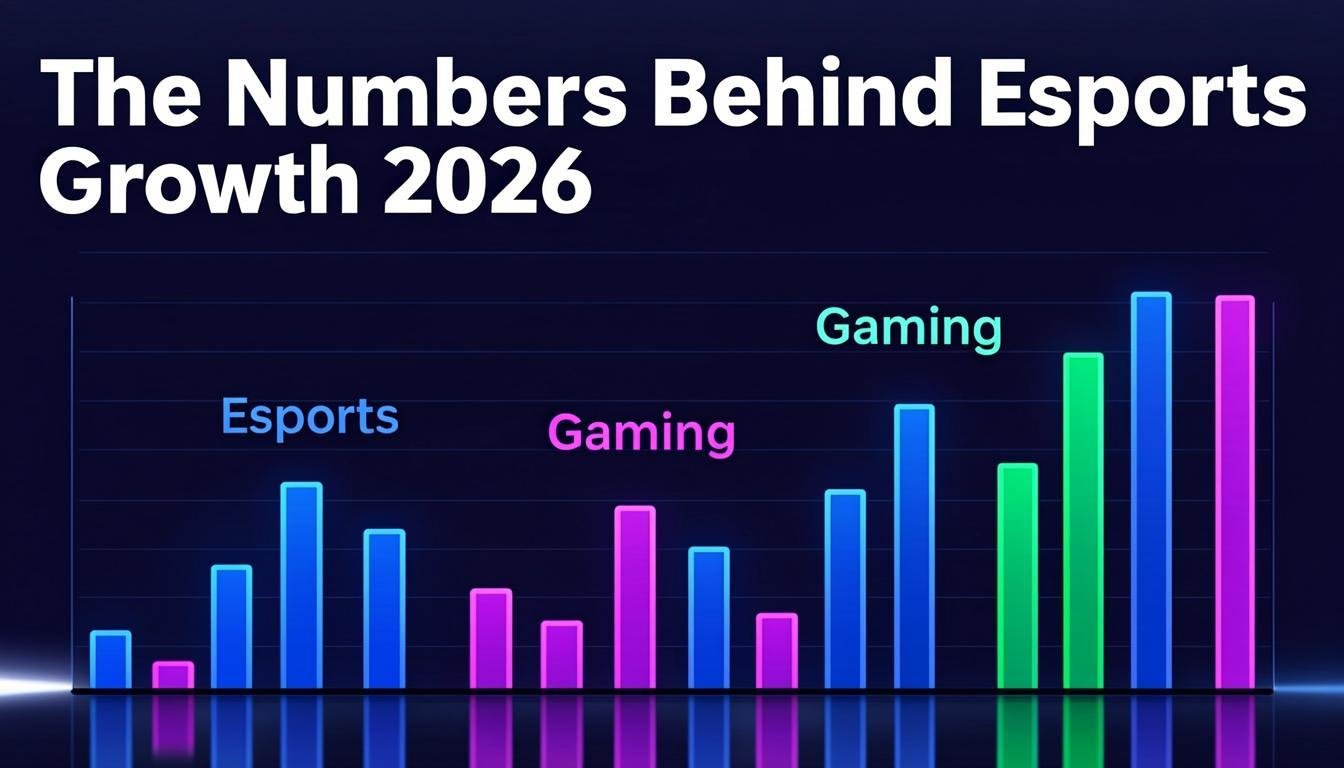
Let us start with the hard data. According to a Forbes analysis of industry reports, the esports economy is on track to generate over $2.5 billion in 2026, up from roughly $1.8 billion in 2024. That is nearly a 40% jump in two years. Sponsorship deals alone account for nearly 60% of that revenue, with brands finally understanding that esports audiences are not just young and engaged — they are loyal and spending real money.
Here is what I find genuinely surprising: the average esports viewer in 2026 watches over 100 minutes per session. That is more than the average NFL broadcast. People are not just dipping in; they are settling in. And with platforms like YouTube, Twitch, and Kick competing for exclusive streaming rights, the viewer experience keeps getting better.
I think what makes esports growth 2026 particularly interesting is that it is not driven by a single game or region anymore. It is a layered, global phenomenon. League of Legends dominates in Korea. Counter-Strike holds Europe. Mobile titles like Free Fire and PUBG Mobile rule Southeast Asia and Latin America. This diversification is what makes the growth sustainable — it is not a bubble tied to one title.
Why Is Esports Growing So Fast Right Now?
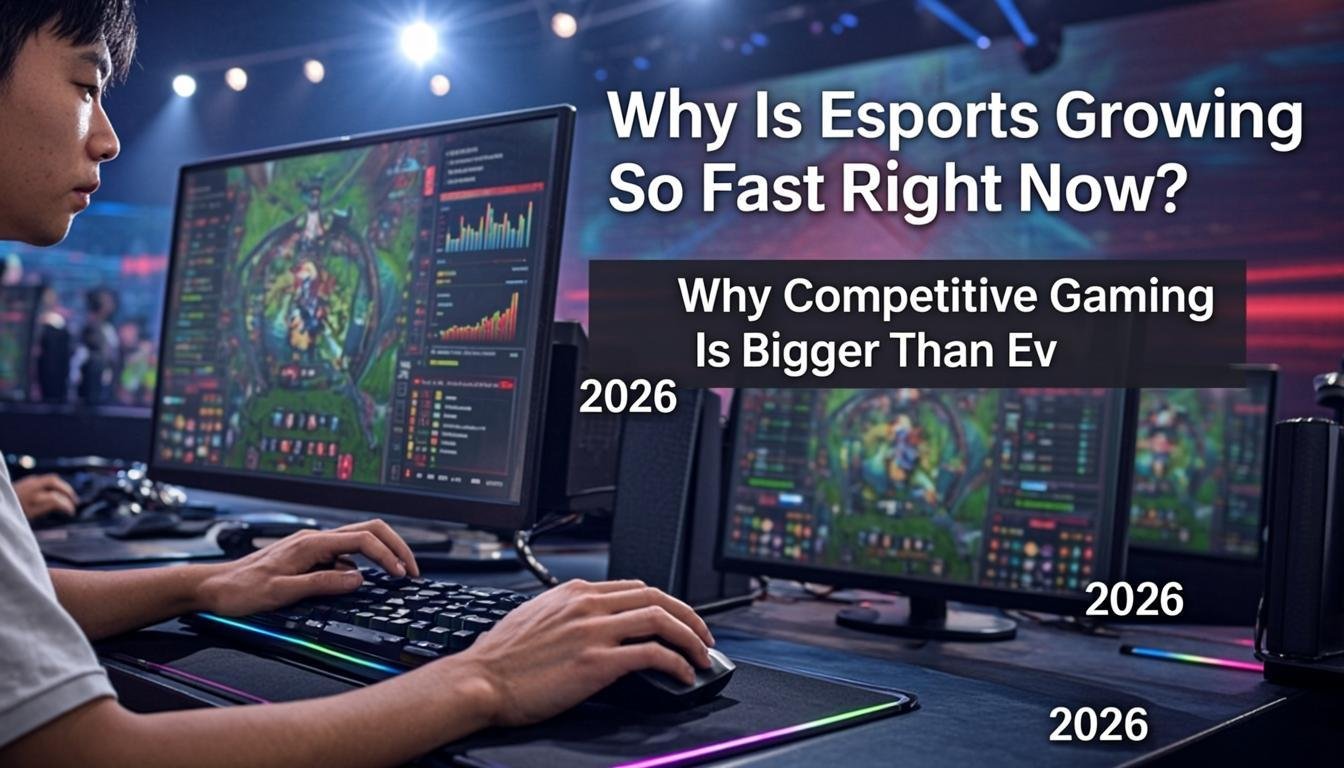


Several factors are converging to drive esports growth 2026 into overdrive:
- Mainstream media adoption: ESPN, BBC, and major broadcasters now air esports events regularly. The International 2025 was covered by BBC Sport alongside Premier League highlights. That legitimacy matters.
- Franchise models: Leagues like the Overwatch Champions Series and Valorant Champions Tour have adopted franchise structures with permanent team slots, giving investors confidence in long-term stability.
- Cultural normalization: When your favorite musician references a Call of Duty tournament and your coworker has an esports team in their fantasy league, the stigma is gone.
- Improved production quality: Broadcasts now feature the same caliber of analysis, replays, and storytelling you expect from traditional sports.
Personally, I think the franchise model is the single biggest driver. It transformed esports from a Wild West of pop-up tournaments into something that resembles actual professional sports leagues. Investors can now project revenue five years out, and that changes everything.
Prize Pools That Rival Traditional Sports
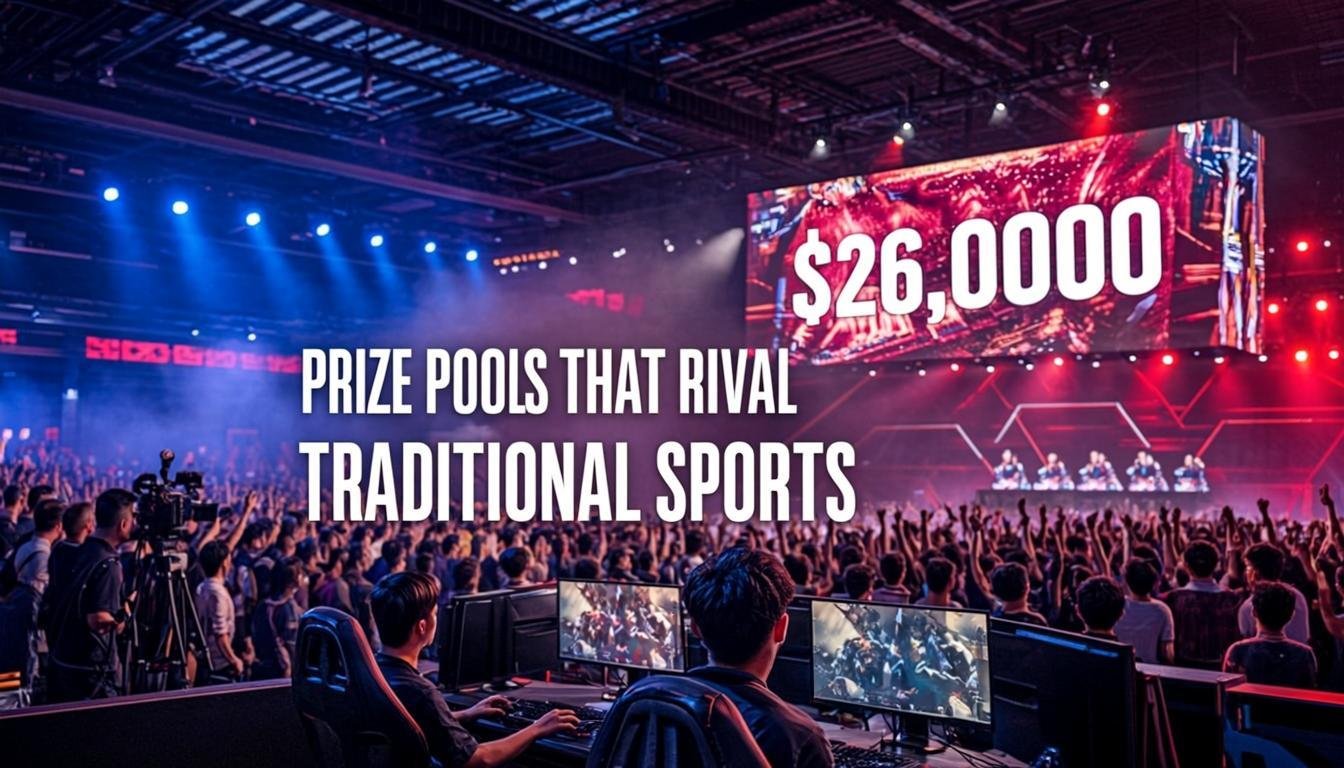
Let me put this in perspective. The Dota 2 International in 2025 had a prize pool of over $40 million. The Super Bowl winner takes home about $10 million in player bonuses. Yes, you read that right — a video game tournament paid out four times what the NFL championship did. That is esports growth 2026 in a nutshell.
Even beyond Dota, games like Fortnite, Valorant, and League of Legends now regularly feature $1-5 million prize pools for major events. And these are not one-off spectacles; they are part of structured seasonal circuits that happen multiple times a year.
I will be honest — I used to think the prize pool conversation was overblown. Sure, one tournament pays a lot, but what about the other 99% of players? That is a fair question, and it is one the industry is still grappling with. But the top-end numbers are no longer a gimmick. They are a signal that real money is flowing into competitive gaming.
Mobile Esports: The Silent Giant
While PC and console esports get most of the Western media attention, mobile esports is quietly the fastest-growing segment in the world. Titles like Mobile Legends: Bang Bang, Free Fire, and PUBG Mobile draw audiences that make Western esports events look small. The M5 World Championship for Mobile Legends drew over 5 million concurrent viewers — more than the NBA Finals.
Esports growth 2026 is not just about bigger screens and fancier PCs. In regions like Indonesia, Brazil, and India, the smartphone IS the gaming platform. And with 5G rollout making mobile streaming smoother than ever, expect this segment to keep accelerating.
This is something I think Western fans and analysts consistently underestimate. We get caught up in Twitch viewer numbers for Valorant and forget that a mobile tournament in Jakarta just drew five times the audience. The center of gravity in esports is shifting, and mobile is a huge reason why.
Esports vs. Traditional Sports: A Comparison
| Metric | Esports 2026 | NFL 2026 |
|---|---|---|
| Global Viewership | 600M+ | 410M |
| Average Viewer Age | 26 | 50 |
| Top Prize Pool | $40M+ | $10M |
| Annual Revenue | $2.5B | $20B |
| Number of Pro Leagues | 25+ | 1 (NFL) |
| Collegiate Programs | 200+ | 1,100+ |
As you can see, esports growth 2026 is impressive in viewership and prize money but still trails in overall revenue. That gap is closing fast though. Sponsorship, media rights, and merchandising are all growing at double-digit percentages annually. It is only a matter of time before the revenue catches up to the audience size. If you want to understand how digital industries scale, check out our deep dive on cryptocurrency regulations in 2026 — the parallels in rapid growth and regulatory response are striking.
From Bedroom to Career: New Paths in Esports
One of the most exciting aspects of esports growth 2026 is the professionalization of the career pipeline. It is no longer just about being a top player. The industry now supports thousands of jobs in coaching, content creation, event production, data analytics, and team management. Over 200 universities now offer esports programs, and many provide scholarships.
I have a friend whose son turned down a traditional college scholarship to accept an esports coaching position at a Division I school. Five years ago, that sentence would have sounded absurd. Today, it is becoming routine. The ecosystem has matured enough that you do not need to be the best player in the world to make a living — you just need to be good at something the industry needs.
For gamers looking at the broader entertainment ecosystem, our guide to the best video games of 2026 covers the titles shaping the industry beyond just competition. And if you are curious about how technology regulation intersects with gaming, our piece on AI regulation updates in 2026 is worth your time.
Challenges Still Facing the Industry
Despite all the positive momentum, esports growth 2026 is not without its problems. Here are the ones I think matter most:
- Player burnout: The average professional esports career lasts just 3-5 years. The grind is intense, and mental health support is still inadequate at many organizations.
- Revenue distribution: While top teams and leagues are thriving, mid-tier and lower-tier organizations struggle to stay profitable. The wealth gap is real.
- Game publisher control: Unlike traditional sports where leagues are independent, esports leagues are often controlled by the game publisher. This creates tension when business interests conflict with competitive integrity.
- Regional inequality: North America and Europe still command the biggest sponsorship dollars, despite Asia having the largest audiences.
These are not dealbreakers, but they are real issues that the industry needs to address if it wants to sustain its current growth trajectory. I am optimistic, but cautiously so. Growth without sustainability is just a bubble.
For more on how entertainment industries navigate growth and regulation, see our coverage of the best Netflix shows of 2026 — streaming and esports share more audience overlap than you might expect.
Frequently Asked Questions
How big is the esports industry in 2026?
The esports industry is projected to exceed $2.5 billion in revenue in 2026, with a global audience of over 600 million viewers. Esports growth 2026 represents one of the fastest expansion rates in the entertainment sector.
Is esports bigger than traditional sports?
In terms of global viewership, esports rivals many traditional sports. However, traditional sports still generate significantly more revenue. Esports growth 2026 is closing that gap rapidly.
What games dominate esports in 2026?
League of Legends, Valorant, Counter-Strike 2, Dota 2, and mobile titles like Mobile Legends and Free Fire are the biggest esports titles in 2026.
Can you make a career in esports without being a pro player?
Absolutely. Coaching, content creation, event production, data analytics, marketing, and team management are all viable career paths in the esports industry.
Is mobile esports really that popular?
Yes. Mobile esports draws some of the largest audiences globally, particularly in Southeast Asia, India, and Latin America. Events regularly surpass 5 million concurrent viewers.
What do you think? Are you surprised by the scale of esports growth 2026, or did you see this coming? Drop a comment below — I read every single one, and I would love to hear your take on where competitive gaming is headed next.
Written by the NowGoTrending Team — your smart friend who actually knows what is going on. We research obsessively so you do not have to. Follow us for more deep dives into the trends shaping 2026 and beyond.
Disclaimer: This article is for informational purposes only. While we strive for accuracy, details may change. NowGoTrending may earn commissions from affiliate links at no extra cost to you.
💡 Our Top Picks — Best Deals Available Now
We may earn a commission if you purchase through these links. Affiliate Disclosure