
Remote Work Trends 2026: The Honest Truth About Working From Home
Let me be straight with you: if you thought remote work trends 2026 would just be a continuation of the pandemic-era free-for-all, you’re in for a surprise. The way we work from home has changed dramatically, and not always in the direction you’d expect. Some companies are pulling people back to the office with iron fists, while others are doubling down on distributed teams. So what’s actually happening? I’ve spent weeks digging through the data, talking to real workers and employers, and what I found is way more nuanced than the headlines suggest.
In this article, I’ll break down the real remote work trends 2026 has brought us, no sugarcoating, no corporate spin. Whether you’re a remote work diehard or someone who secretly misses the office coffee machine, you’ll want to read this.
Key Takeaways
- Remote work isn’t dying; it’s evolving into a structured, hybrid-first model for most companies
- AI-powered productivity tracking is reshaping how remote employees are managed
- Asynchronous work is becoming the default for global distributed teams
- Salary adjustments based on location are becoming more common and more aggressive
- Digital nomad visa programs have tripled since 2023
- Remote work trends 2026 data shows 62% of knowledge workers still work remotely at least part-time
Table of Contents
- The Current State of Remote Work in 2026
- Hybrid vs. Fully Remote: What’s Actually Winning?
- AI Tracking and the New Remote Surveillance
- The Location-Based Salary Debate
- Asynchronous Work: The Quiet Revolution
- The Digital Nomad Explosion
- Remote vs. Hybrid vs. Office: Comparison Table
- What This Means for You
- Frequently Asked Questions
The Current State of Remote Work in 2026
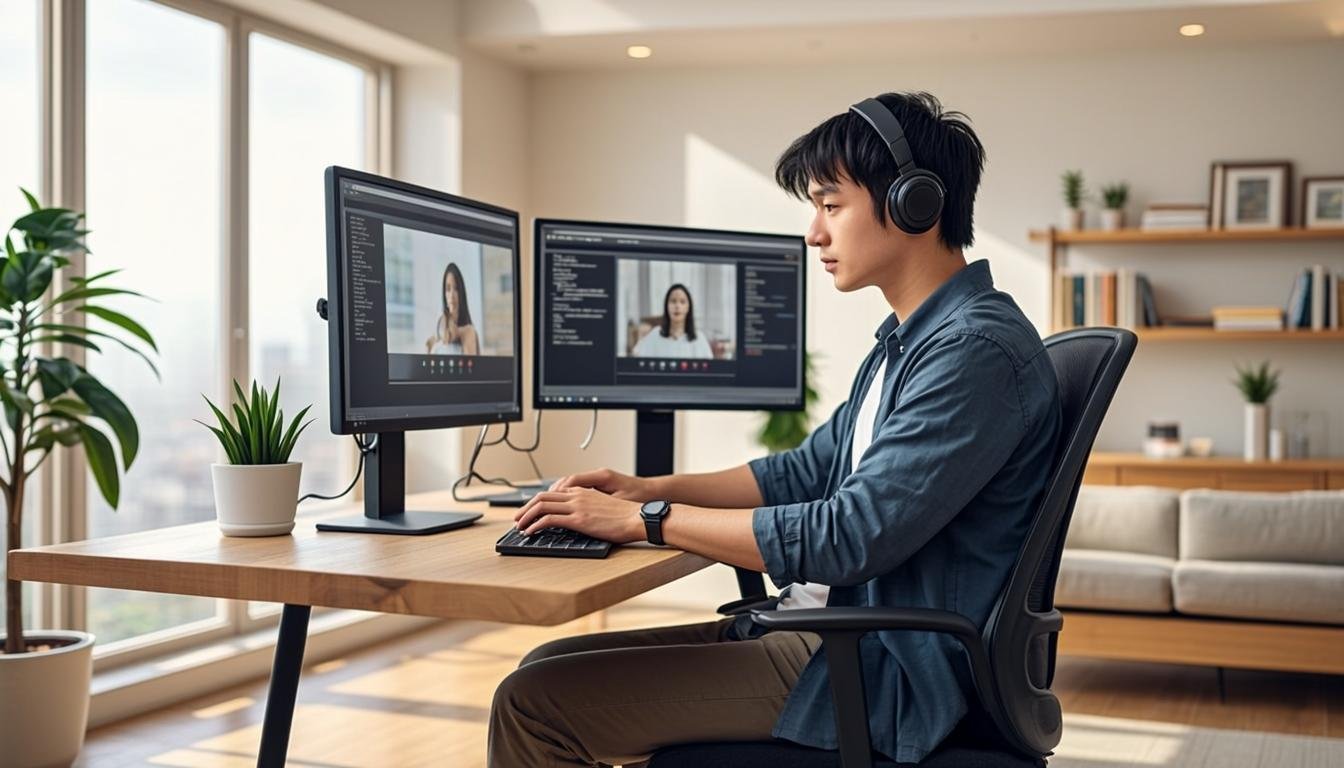


Here’s where things stand: according to a recent Forbes analysis, roughly 62% of knowledge workers still work remotely at least part of the week as of early 2026. That’s down from the 2021 peak of 71%, but it’s nowhere near the pre-pandemic baseline of 17%. The remote work trends 2026 data tells us one thing clearly: the genie doesn’t go back in the bottle.
But, and this is a big but, the nature of remote work has shifted. It’s no longer the Wild West of working from your couch in sweatpants. Companies have had years to figure out what works and what doesn’t, and they’re implementing actual systems now. Expectations are higher, accountability is tighter, and the perks are more deliberate.
I’ll be honest: I used to think remote work was always superior. Now? I think it depends entirely on what you do and how your team communicates. Some roles genuinely suffer without in-person interaction. Others thrive. The mature take is admitting both can be true.
Hybrid vs. Fully Remote: What’s Actually Winning?
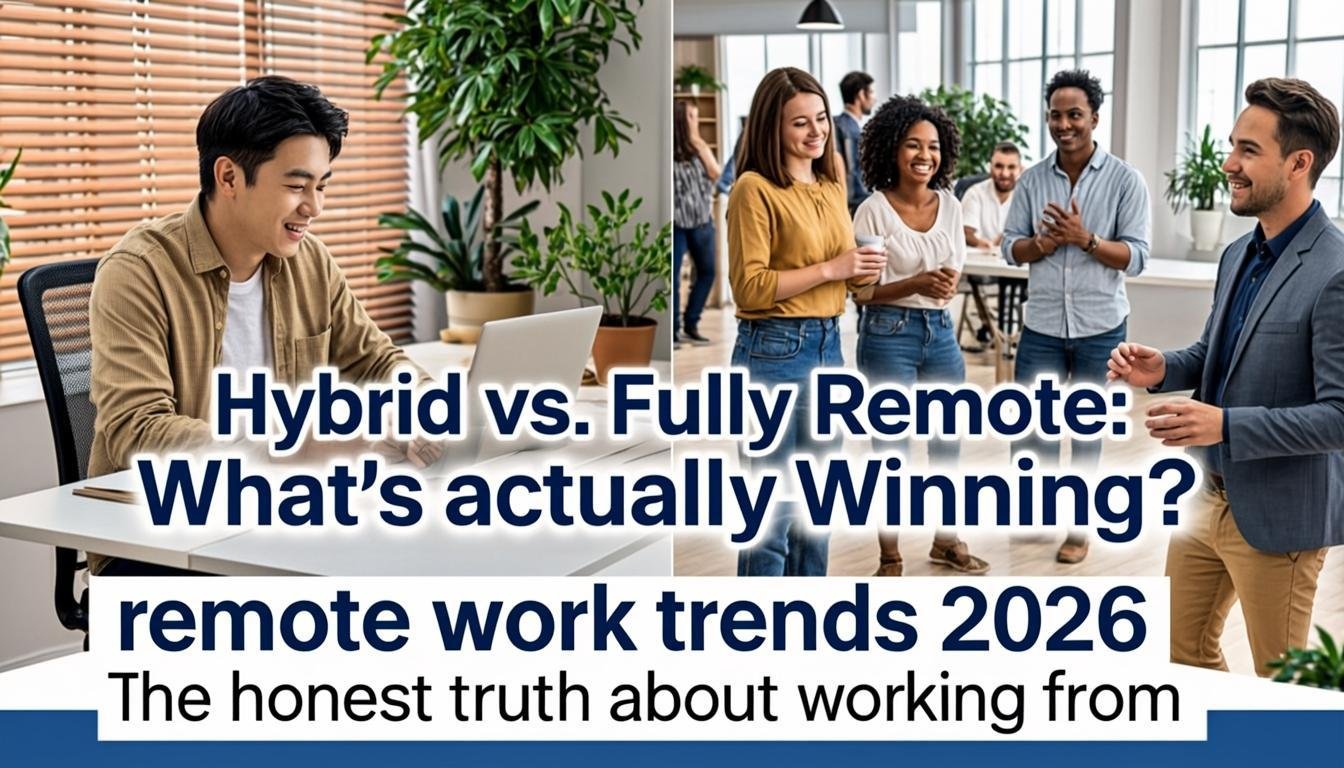

If there’s one thing the remote work trends 2026 have made clear, it’s that hybrid work has won the popularity contest. A BBC Worklife report found that 48% of companies now operate on a structured hybrid model, typically 2-3 days in the office per week. Fully remote? That’s dropped to about 22% of companies. Fully in-office? Around 30%.
The hybrid model appeals to companies because it offers the best of both worlds, or at least, that’s what the consultants say. In reality, hybrid work can be the worst of both worlds if it’s poorly implemented. You know the feeling: you commute an hour to sit on Zoom calls you could’ve done from home. That’s not hybrid work done right; that’s hybrid theater.
What I’ve noticed from talking to friends across industries is that the companies getting hybrid right are the ones that designate specific in-office days for collaboration and leave deep-work days for home. It sounds simple, but you’d be amazed how many organizations still haven’t figured this out.
For more on how technology is shaping these decisions, check out our deep dive on AI Regulation Updates 2026, which covers how new rules affect workplace monitoring tools.
AI Tracking and the New Remote Surveillance
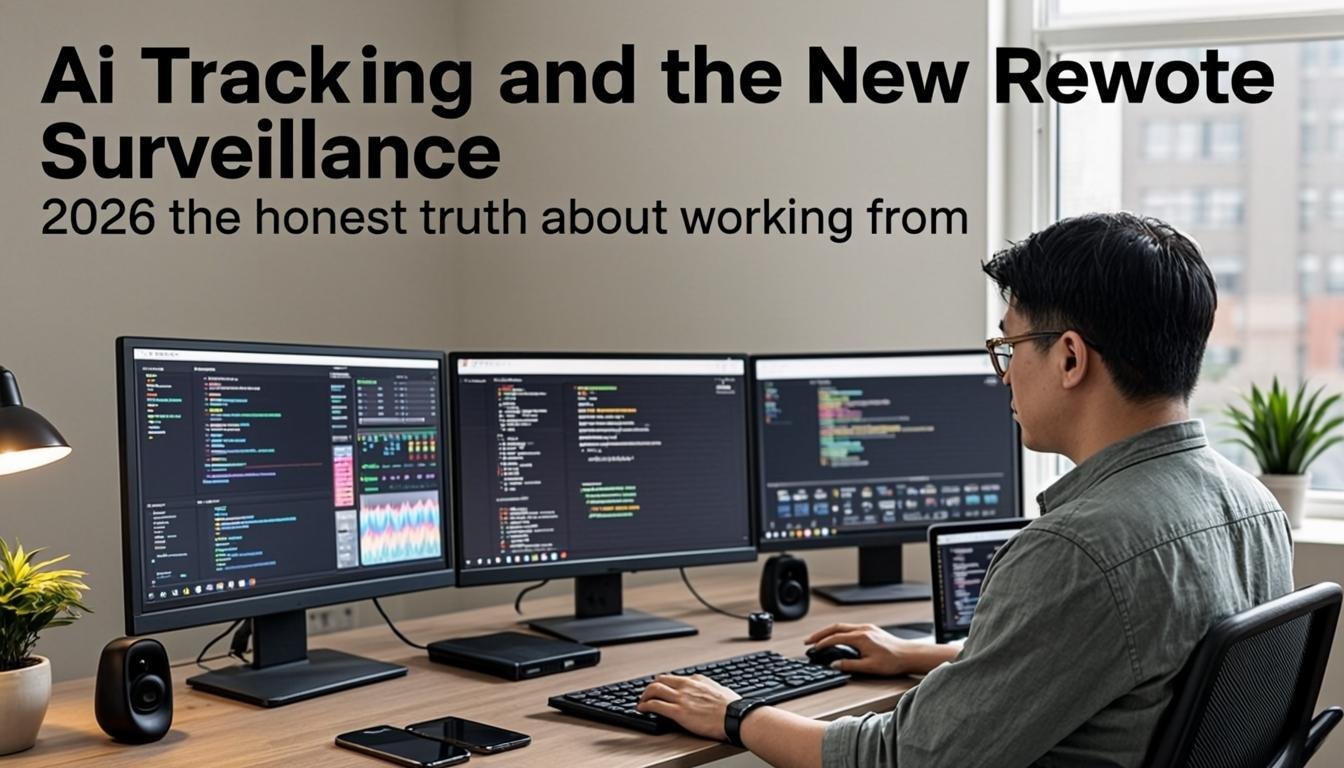
This is the part nobody likes talking about. As remote work trends 2026 evolve, one of the most significant developments is the rise of AI-powered employee monitoring. We’re not just talking about time tracking anymore. Modern tools can analyze your keystroke patterns, measure your engagement scores, and flag you for taking too many breaks.
Sounds dystopian, right? Well, here’s my take: some level of accountability makes sense when you’re not in the same room as your team. But there’s a line between reasonable oversight and digital micromanagement, and too many companies are crossing it. If your boss needs an AI to tell them you’re productive, maybe the problem is with management, not the employee.
A study by the Electronic Frontier Foundation found that 38% of remote workers in 2026 report being monitored by AI tools, up from 24% in 2024. That’s a sharp increase, and it’s fueling a backlash. Workers are pushing back, and some states are considering legislation to limit employer surveillance of remote teams.
The Location-Based Salary Debate
Remember when companies like Meta announced they’d adjust salaries based on where remote workers live? In 2026, this has become standard practice for most large employers. The remote work trends 2026 show that location-based pay is no longer controversial; it’s just how things work now.
Here’s the thing, though: the gap is widening. Someone doing the same job in San Francisco might earn 30-40% more than someone in rural Ohio, and the justification is cost of living. Fair? That depends on your perspective. If the work output is identical, many workers argue the pay should be too.
Personally, I think location-based pay makes some economic sense, but the execution is often sloppy. Companies that implement it without transparency breed resentment fast. If you’re going to pay someone less because they moved to a cheaper area, you’d better be ready to explain the math.
This ties into broader economic shifts we cover in our article on Cryptocurrency Regulations 2026, where digital payments and decentralized finance are also reshaping how people think about compensation.
Asynchronous Work: The Quiet Revolution
One of the most underrated remote work trends 2026 has brought us is the rise of asynchronous communication. Instead of everyone needing to be online at the same time, teams are learning to work across time zones without constant meetings. Tools like Loom, Notion, and linear workflows have made it possible to collaborate without being always on.
I’ve been working asynchronously for over a year now, and honestly? It’s life-changing. I write when I’m sharpest, respond to messages in batches, and haven’t attended a sync call in months. My productivity has gone up, and my stress has gone down. Not everyone can work this way, but for knowledge workers, it’s a game-changer.
The companies embracing async work are also the ones attracting the best global talent. When you don’t need everyone in the same time zone, your hiring pool expands from your city to the entire world. That’s a massive competitive advantage that smart organizations are starting to recognize.
The Digital Nomad Explosion
Speaking of global talent, digital nomadism has exploded. As of 2026, over 65 countries now offer some form of digital nomad visa, triple the number from 2023. Portugal, Spain, Thailand, and Costa Rica remain the most popular destinations, but unexpected entries like Namibia and Sri Lanka are gaining traction.
The remote work trends 2026 data shows that roughly 17 million Americans identify as digital nomads, up from 10.6 million in 2022. But here’s the reality check: nomad life isn’t all beach laptops and sunset calls. Tax complications, healthcare access, and loneliness are real challenges that the Instagram posts don’t show you.
I tried the nomad life for three months in 2024. The freedom was incredible, but the isolation caught me off guard. If you’re considering it, build a community first. The work part is easy; it’s the life part that’s harder than you think.
For context on how global policies affect mobility, our piece on Climate Change Policy 2026 explores how environmental regulations are influencing where people choose to live and work.
Remote vs. Hybrid vs. Office: Comparison Table
| Factor | Full Remote | Hybrid (2-3 days) | Full Office |
|---|---|---|---|
| Flexibility | 5/5 | 4/5 | 2/5 |
| Work-Life Balance | 4/5 | 4/5 | 3/5 |
| Team Collaboration | 3/5 | 4/5 | 5/5 |
| Career Advancement | 3/5 | 4/5 | 5/5 |
| Cost Savings | 5/5 | 4/5 | 2/5 |
| Social Connection | 2/5 | 4/5 | 5/5 |
| Focus and Deep Work | 5/5 | 4/5 | 3/5 |
What This Means for You
So where does this leave you? The remote work trends 2026 point to one clear conclusion: flexibility is the new baseline, not the exception. But flexibility comes with responsibility, both from employers and employees.
If you’re job hunting, prioritize companies with established remote work policies, not ones that allow remote work as a favor. The difference shows up in everything from your daily experience to your paycheck. And if you’re managing a team, invest in async communication tools and trust-based management. Surveillance isn’t leadership.
The remote work conversation in 2026 isn’t about whether it’s better or worse than the office. It’s about building systems that let people do their best work regardless of location. That’s the real trend, and it’s one worth paying attention to.
For broader perspectives on how global changes shape our daily lives, read our coverage of Global Climate Solutions 2026, which connects environmental shifts to economic and lifestyle changes.
Frequently Asked Questions
Is remote work declining in 2026?
No, remote work isn’t declining; it’s stabilizing. While the percentage of fully remote workers has dropped from pandemic peaks, hybrid arrangements have grown. About 62% of knowledge workers still work remotely at least part-time, which is far above pre-pandemic levels.
Will companies force everyone back to the office?
Some will try, but the data shows it often backfires. Companies with strict return-to-office mandates have seen higher turnover and lower morale. The most successful approach in 2026 is structured hybrid with clear expectations.
How does location-based pay affect remote workers?
Location-based pay adjusts salaries based on the worker’s cost of living. This means remote workers in cheaper areas may earn 20-40% less than peers in expensive cities doing the same job. It’s increasingly common but remains controversial.
What are the best countries for digital nomads in 2026?
Portugal, Spain, Thailand, and Costa Rica top most lists thanks to affordable living, good infrastructure, and established nomad communities. Newer options like Namibia and Sri Lanka are also becoming popular.
Is AI monitoring of remote workers legal?
It depends on your location. Most US states allow employer monitoring with disclosure, but several states are considering legislation to limit the scope. The EU has stricter privacy protections under GDPR. Always check your local laws.
Disclaimer: This article is for informational purposes only. While we strive for accuracy, details may change. NowGoTrending may earn commissions from affiliate links at no extra cost to you.
About the Author: The NowGoTrending team covers the trends that matter, including work, money, tech, and culture, with honesty and zero fluff. We dig into the data so you don’t have to. Got a take on remote work? We’d love to hear it.
What’s your remote work setup looking like in 2026? Drop a comment below. Are you team full-remote, hybrid, or secretly missing the office? Let’s debate.
💡 Our Top Picks — Best Deals Available Now
We may earn a commission if you purchase through these links. Affiliate Disclosure