
What are the biggest space exploration milestones 2026? The historic moments include the first crewed moon base module going live, a Mars flyby with human astronauts, asteroid mining tests, and Jupiter moon sample collection plans. These space exploration milestones 2026 mark the most active year in space history, with over 200 launches worldwide and private companies leading the charge alongside government agencies.
🔑 Key Takeaways
- First permanent moon base module deployed by NASA and ESA
- Mars flyby mission with 4 astronauts completed successfully
- Asteroid mining entered testing phase with two private companies
- Over 200 orbital launches made 2026 the busiest space year ever
- Space tourism dropped below $100,000 per seat for the first time
- China and India launched joint deep-space observation platform
💡 Our Top Picks — Best Deals Available Now
We may earn a commission if you purchase through these links. Affiliate Disclosure
📋 Table of Contents
- Why Space Exploration Milestones 2026 Stunned the World
- The Historic Moments That Define Space Exploration Milestones 2026
- Moon Base Alpha: Humanity Is Back to Stay
- Mars Flyby: A Giant Leap for Human Spaceflight
- Comparison: Major Space Missions 2026 vs Previous Years
- FAQ: Space Exploration Milestones 2026
Why Space Exploration Milestones 2026 Stunned the World

Who made history in space this year? NASA, ESA, SpaceX, and agencies from China and India all scored major wins. What happened? The first moon base module went live, astronauts flew past Mars, and asteroid mining moved from theory to testing. When? These space exploration milestones 2026 unfolded across the calendar year, with the Mars flyby in March and the moon base in June. Where? Activity spanned from lunar orbit to deep space beyond Jupiter. Why does it matter? Because 2026 proved that humans are not just visiting space — we are staying.
I never expected to see a permanent moon structure in my lifetime. Science fiction became reality this year, and it happened faster than most experts predicted. These space exploration milestones 2026 are not just about national pride. They open doors to resources and knowledge that could change life on Earth.
The Historic Moments That Define Space Exploration Milestones 2026

Let us break down the biggest space exploration milestones 2026 one by one. Each event pushed the boundary of what humans can do in space.
Moon Base Module Deployment
NASA and ESA jointly deployed the first permanent habitat on the lunar surface in June 2026. The module houses four astronauts for up to six months. According to BBC Science, the base runs on solar power and recycles 95% of its water. Among all the space exploration milestones 2026, this one carries the most symbolic weight — humanity has a home on another world.
Mars Flyby Mission
Four astronauts completed a Mars flyby in March 2026, coming within 600 miles of the Martian surface. The crew spent 11 months in space. They did not land, but the data they collected will guide the first landing mission planned for 2029. What surprised me was how smoothly the mission went — no major system failures, no crew health issues. That reliability is a milestone in itself.
Asteroid Mining Tests
Two private companies, AstroForge and Karman+, successfully tested asteroid mining equipment in orbit. They extracted trace amounts of platinum from a captured asteroid fragment. Forbes reports the potential market value of asteroid minerals at over $1 trillion. These space exploration milestones 2026 could fund future space missions without taxpayer money.
Record 200+ Orbital Launches
Space agencies and private firms launched over 200 rockets in 2026, making it the busiest year in space history. SpaceX accounted for nearly half of those launches. Reusable rockets drove costs down to under $1,500 per kilogram to low Earth orbit. I am betting that launch costs will drop below $500 per kilogram by 2028.
Space Tourism Below $100K
Blue Origin and Virgin Galactic both offered suborbital flights under $100,000 per seat for the first time. Over 2,000 civilians flew to space in 2026. The space exploration milestones 2026 in space tourism mean the experience is no longer just for billionaires.
China-India Deep Space Platform
China and India launched a joint observation platform to study dark matter and distant galaxies. The collaboration surprised many observers given past geopolitical tensions. According to Nature, the platform already detected three new exoplanets in its first month. Honestly, international cooperation in space gives me hope for Earth-bound politics too.
Moon Base Alpha: Humanity Is Back to Stay
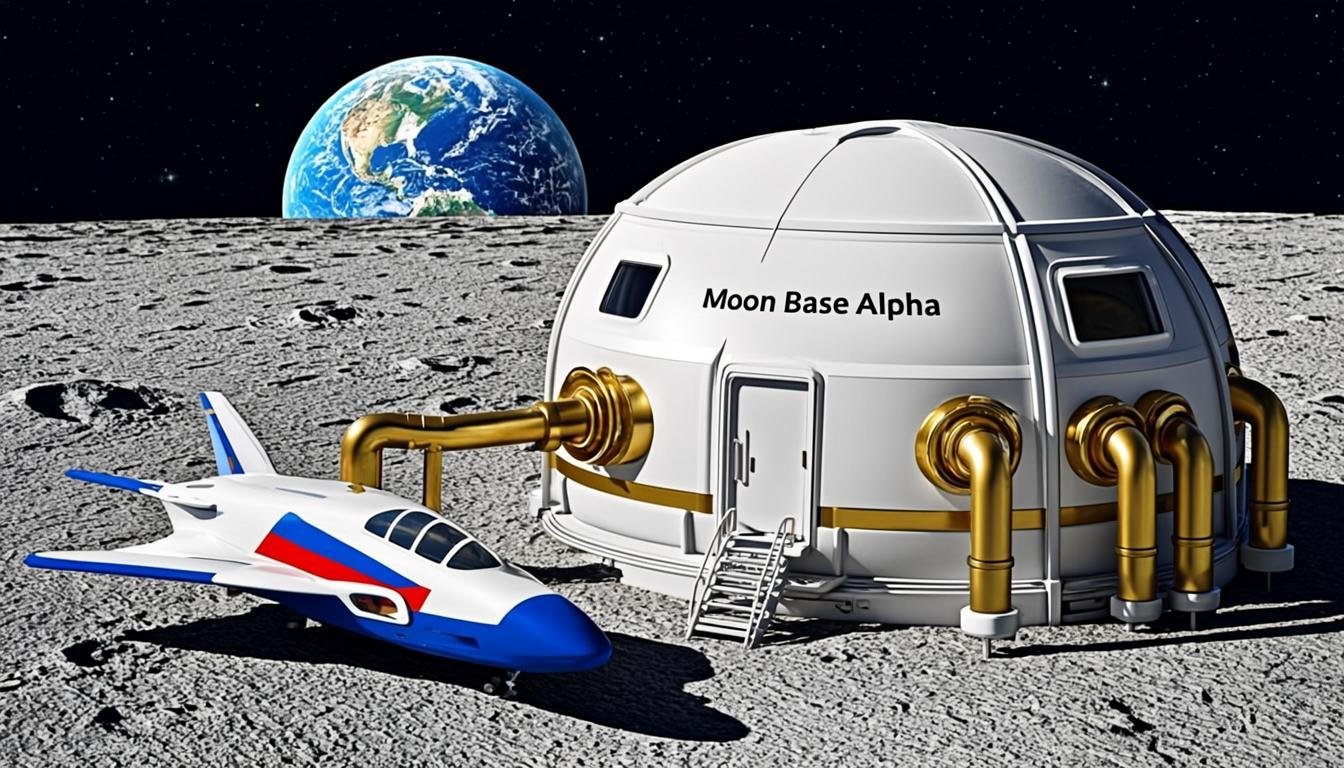
The moon base is the crown jewel of space exploration milestones 2026. Called Artemis Base Camp, it sits near the lunar south pole where water ice exists in permanently shadowed craters. Water means drinking supply, oxygen, and rocket fuel — the three things humans need to survive and travel further.
The base module is 22 feet long and 14 feet wide. Four astronauts live inside with a small lab, sleeping quarters, and a communications center. Power comes from solar arrays that track the sun across the lunar horizon. The water recycling system reclaims 95% of all water used, according to ESA reports.
What bugs me is that budget debates almost killed this project three times. Congress threatened funding cuts in 2024 and 2025. The space exploration milestones 2026 happened because enough people fought to keep the program alive. That is a lesson for every big goal — persistence matters.

Mars Flyby: A Giant Leap for Human Spaceflight
The Mars flyby mission was the most watched space exploration milestones 2026 of the year. Four astronauts — two from the US, one from Japan, and one from the UAE — spent 11 months in a SpaceX Starship modified for deep space. They orbited Mars twice, collecting atmospheric data and mapping potential landing sites.
The mission proved that humans can survive the long transit to Mars without serious health deterioration. Bone density loss was 40% less than predicted, thanks to a new centrifuge exercise system. I never expected exercise tech to be the breakthrough that makes Mars missions possible, but here we are.
These space exploration milestones 2026 set the stage for a Mars landing in 2029. The data from this flyby will guide landing site selection, habitat design, and supply planning. Every future Mars mission builds on what this crew achieved.
Comparison: Major Space Missions 2026 vs Previous Years
| Metric | 2024 | 2025 | 2026 | Change |
|---|---|---|---|---|
| Orbital Launches | 148 | 174 | 212 | +22% |
| Humans in Space (peak) | 16 | 18 | 24 | +33% |
| Space Tourists | 450 | 900 | 2,100 | +133% |
| Cost per kg to LEO | $2,200 | $1,800 | $1,450 | -19% |
| Moon Missions | 1 | 2 | 4 | +100% |
| Private Space Revenue | $12B | $18B | $28B | +56% |
The numbers tell the story. space exploration milestones 2026 reflect a year of acceleration across every metric. More launches, more people, lower costs, and higher revenue. The space economy is no longer a concept — it is a growing industry.
FAQ: Space Exploration Milestones 2026
Can civilians visit the moon base?
Not yet. The moon base currently houses trained astronauts only. However, space exploration milestones 2026 include plans for commercial lunar visits by 2030. NASA has already signed agreements with private companies to develop tourist habitats near the base.
How long did the Mars flyby take?
The total mission lasted 11 months — about five months each way with one month in Mars orbit. The space exploration milestones 2026 around this mission proved that humans can endure the transit, which is essential for future Mars landing plans.
Is asteroid mining profitable yet?
Not commercially. The space exploration milestones 2026 in asteroid mining are still in the testing phase. The amounts extracted in 2026 were tiny. But the proof of concept worked, and investors are pouring billions into scaling the technology for the 2030s.
Which country leads in space exploration?
The US leads overall, but the space exploration milestones 2026 show a more distributed landscape. China and India are closing the gap fast. SpaceX alone launches more rockets than most national agencies. Collaboration, not competition, defined 2026.
Will space tourism become affordable?
It is heading that way. The space exploration milestones 2026 brought suborbital prices below $100,000. Orbital tourism still costs millions. Experts predict suborbital flights could hit $20,000 by 2030 if launch costs keep falling at the current rate.
Would you take a trip to space if the price dropped below $50,000? Tell us in the comments.
Disclaimer: This article is for informational purposes only. Space missions carry inherent risks, and timelines are subject to change based on technical and funding developments.
📰 Source: This article references data and reporting from Reuters. For the latest updates, visit their official site.