Best Streaming Devices 2026: 7 Picks for the Ultimate Movie Night
Here’s the thing about best streaming devices 2026 recommendations: most reviews treat them like spec sheets. More RAM, faster processor, higher resolution support. But after testing these devices in my actual living room, with my actual family, fighting over the actual remote—I can tell you that specs tell you maybe 30% of the story.
The real questions are: Does the interface make you want to throw the remote? Can your technologically-challenged parents figure it out? Does it find the show you want without making you hunt through seven apps? Those are the things that determine whether movie night is magical or miserable.
Table of Contents
Key Takeaways
- AI-powered content aggregation is the breakout feature of 2026 streaming devices—searching across all your subscriptions at once is finally seamless
- 8K streaming support exists but remains largely theoretical due to bandwidth requirements
- The $50-$100 price range is the sweet spot; devices above $150 only make sense for home theater enthusiasts
- Smart TV built-in interfaces still can’t match dedicated streaming devices for speed and app support
- Dolby Vision and Atmos support should be non-negotiable if you have compatible equipment
Table of Contents
- 7 Best Streaming Devices 2026 Ranked
- Comparison Table
- Why Your Smart TV’s Built-In Interface Isn’t Enough
- AI Search: The Feature You Didn’t Know You Needed
- Audio and Video Quality: What Actually Matters
- Best Budget Streaming Devices 2026
- Frequently Asked Questions
7 Best Streaming Devices 2026 Ranked
1. Apple TV 4K (3rd Gen)
Apple’s streaming box remains the gold standard, and the 2026 edition widened the gap further. The A17 chip makes navigation instant—there’s zero lag anywhere in the interface. The new Siri Remote with Find My support (yes, you can now locate your lost remote from your iPhone) solves the number one household argument about streaming devices.
The real killer feature is Apple’s universal search. Ask Siri for “that show with the dragons” and it finds House of the Dragon across HBO, Prime, and whatever other service carries it. It tells you which subscriptions you already have and which ones require payment. No other platform does this as comprehensively.
My take: At $149, it’s the most expensive mainstream streaming device. And I don’t care—it’s worth every penny. The combination of speed, interface quality, and ecosystem integration (especially if you have an iPhone) makes everything else feel compromised. My family went from Roku to Apple TV two years ago, and going back would feel like downgrading from a Tesla to a golf cart.
2. Roku Ultra (2026 Edition)
Roku remains the every-person’s streaming champion. The 2026 Ultra finally adds Dolby Vision support (only five years late, but better than never), and the interface remains the cleanest, most ad-light experience available. The voice remote with headphone jack is still the best feature nobody else copies—private listening is a game-changer for apartment dwellers.
Roku’s content agnosticism is its superpower. Unlike Amazon and Apple, Roku doesn’t prioritize its own content over competitors. Every app gets equal billing, and the search results aren’t biased toward a particular subscription.
3. Nvidia Shield TV Pro (2nd Gen)
The enthusiast’s choice. The new Shield Pro runs Android TV 14 with an upgraded Tegra chip that handles AI upscaling better than anything else on the market. Watch a 1080p stream and the Shield makes it look nearly 4K. It’s the best device for people with large libraries of local media, and it doubles as a capable gaming device with GeForce Now.
My take: The Shield is overkill for most people, but for home theater enthusiasts, it’s unmatched. The AI upscaling alone justifies the $199 price if you watch a lot of older content. I run one in my basement theater and a Roku in the bedroom—the right tool for each job.
4. Amazon Fire TV Cube (3rd Gen)
Amazon’s hub strategy—combining a streaming device with a hands-free Alexa speaker—makes the Fire TV Cube the most versatile living room device. The 3rd Gen adds WiFi 7 support and a faster processor that finally eliminates the lag that plagued earlier Cubes. Hands-free voice control for both streaming and smart home devices is genuinely convenient.
The catch? Amazon’s interface is still the most ad-heavy and self-promoting of any streaming platform. Fire TV will suggest Prime Video content before showing you what’s available on Netflix or Disney+, even if you don’t have Prime. It’s annoying and it’s intentional.
My take: If you already have a house full of Echo devices, the Cube makes perfect sense as your streaming hub. But the interface bias toward Amazon’s own services gets old fast. I wish they’d let users customize the home screen to reflect their actual subscriptions instead of Amazon’s promotional priorities.
5. Google TV Streamer (2nd Gen)
Google’s upgraded streamer is a significant improvement over the original Chromecast with Google TV. The built-in Gemini AI creates personalized watch lists based on your viewing habits, and the “For You” tab is the most accurate content recommendation engine I’ve tested. It also doubles as a Matter/Thread smart home hub, which is a nice bonus.
At $99, it hits the sweet spot of features and price. The interface is clean, search is excellent, and the smart home integration is thoughtful rather than gimmicky.
6. Chromecast with Google TV (4K, 2026)
The budget pick that doesn’t feel budget. For $49, you get 4K HDR streaming, the full Google TV interface, and Gemini-powered search. It’s missing the smart home hub features of the Streamer, and it has less storage for apps, but for pure streaming, it’s nearly identical to its pricier sibling.
7. TiVo Stream 4K+
The underdog that deserves more attention. TiVo’s content aggregation is exceptional—it integrates live TV (via Sling), streaming apps, and your personal media into one unified guide. The interface feels like a modern cable box, which is either comforting or dated depending on your perspective. At $79, it’s a solid alternative to the mainstream options.
My take: TiVo Stream is perfect for cord-cutters who miss the channel-surfing experience. The unified guide makes it easy to browse what’s on across all your services at once, rather than opening each app individually. It’s a niche product, but for that niche, it’s the best option.
Best Streaming Devices 2026: Comparison Table
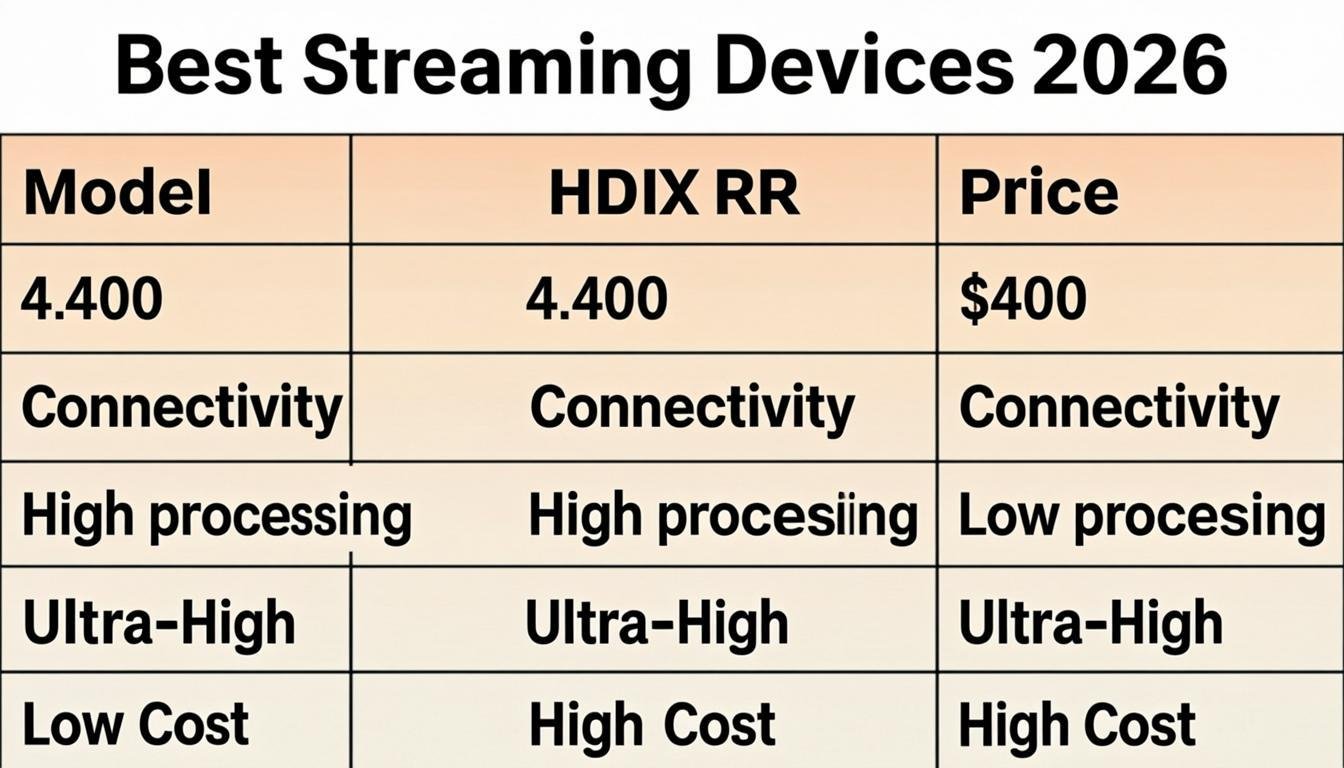
| Device | Price | Max Resolution | Dolby Vision | Dolby Atmos | AI Search | Best For |
|---|---|---|---|---|---|---|
| Apple TV 4K (3rd Gen) | $149 | 4K HDR | Yes | Yes | ★★★★★ | Apple ecosystem |
| Roku Ultra (2026) | $99 | 4K HDR | Yes | Yes | ★★★★☆ | Most people |
| Nvidia Shield Pro | $199 | 4K HDR/8K | Yes | Yes | ★★★☆☆ | Enthusiasts |
| Fire TV Cube (3rd Gen) | $139 | 4K HDR | Yes | Yes | ★★★★☆ | Alexa households |
| Google TV Streamer | $99 | 4K HDR | Yes | Yes | ★★★★★ | Smart home users |
| Chromecast 4K | $49 | 4K HDR | Yes | Yes | ★★★★☆ | Budget pick |
| TiVo Stream 4K+ | $79 | 4K HDR | Yes | Yes | ★★★☆☆ | Cord-cutters |
Why Your Smart TV’s Built-In Interface Isn’t Enough
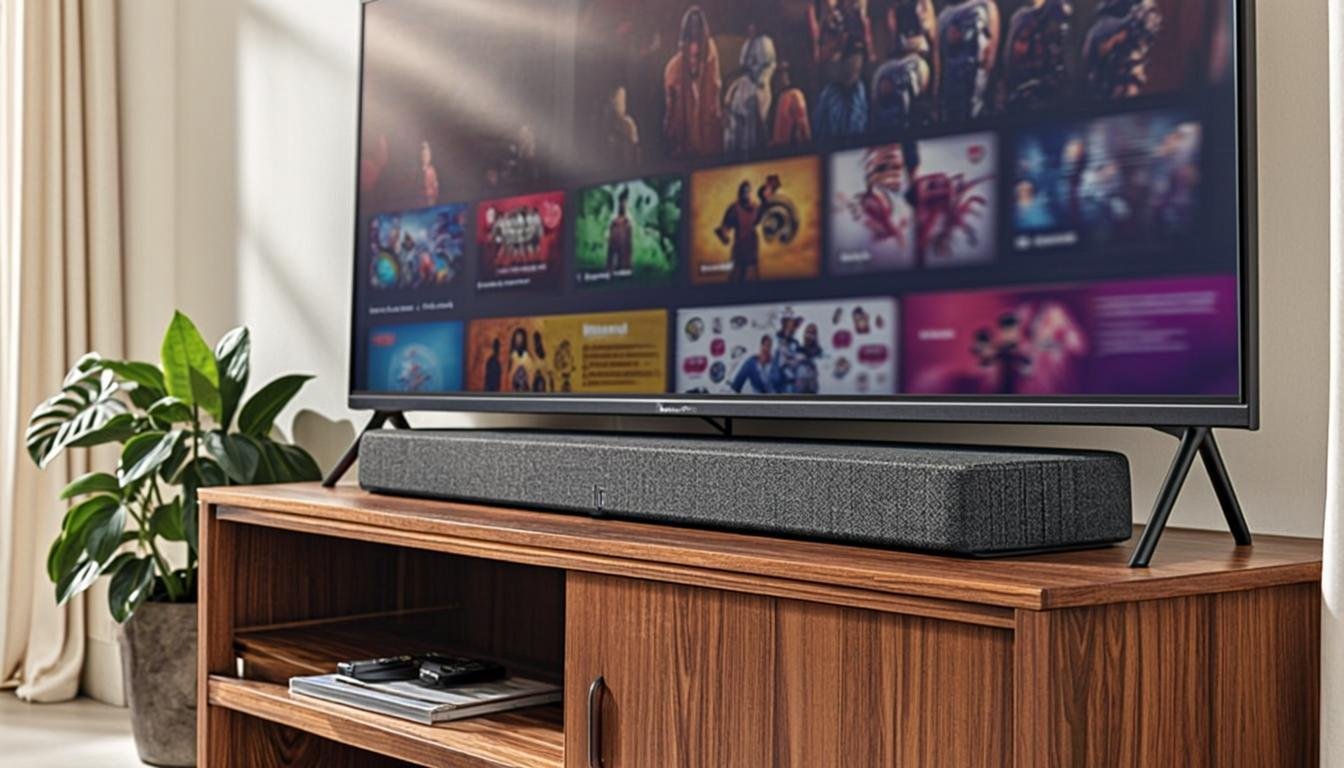
I hear this all the time: “My TV already has Netflix built in. Why do I need a streaming device?” It’s a fair question, and here’s my honest answer: built-in smart TV interfaces are almost always worse than even the cheapest dedicated streaming device.
Here’s why:
- Speed: Smart TV processors are typically 2-3 generations behind dedicated streaming devices. Menus lag, apps load slowly, and voice search is unreliable.
- Updates: TV manufacturers stop updating their smart TV software after 2-3 years. A $49 Roku will get updates for 5+ years and cost less than the “smart” premium built into your TV.
- App selection: Smart TV app stores are missing apps that every dedicated streaming platform has. New streaming services launch on Roku, Apple TV, and Fire TV first—TV platforms come months or years later, if at all.
- Ads: Some TV manufacturers (Samsung, I’m looking at you) insert ads into the home screen of TVs you already paid for. Dedicated streaming devices are ad-supported too, but at least you chose to install them.
My take: I always tell people to buy a dumb TV (if you can find one) and pair it with a streaming device. You’ll save money, get better performance, and your TV won’t become obsolete when the manufacturer stops updating the software. If you already have a smart TV, just ignore the built-in interface and plug in a streaming stick. Your experience will be dramatically better.
AI Search: The Feature You Didn’t Know You Needed
The most significant improvement in best streaming devices 2026 isn’t picture quality or processing speed—it’s AI-powered search that actually works across all your subscriptions.
Here’s the problem it solves: the average household subscribes to 4.7 streaming services. Finding a specific movie means checking each app individually, or Googling “where to watch [movie name]” and hoping the results are current. It’s tedious and annoying.
AI search changes this. On Apple TV, Google TV, and even Roku’s updated search, you can now describe what you’re looking for in natural language. “Find me a comedy from the 90s with Bill Murray” or “that new show about chefs”—the AI understands and searches across all your installed apps simultaneously.
Google TV’s Gemini integration goes further by proactively suggesting content based on your viewing patterns. After I watched three episodes of The Bear, it recommended related cooking shows, chef documentaries, and other FX series I’d missed. The recommendations were genuinely good—not the generic “because you watched X” suggestions of years past.
My honest opinion: AI search is the feature that finally makes navigating the fragmented streaming landscape bearable. If you’re choosing between two similarly-priced devices, pick the one with better search. You’ll use it every single day, and it saves more time than any processor upgrade ever could.
As Forbes noted, AI-powered content discovery is becoming the primary differentiator in the streaming device market, with smart recommendations driving 40% of viewing decisions on newer devices.
Discover more AI innovations in our free AI tools 2026 guide and our AI generated content 2026 deep dive.
Audio and Video Quality: What Actually Matters
Let me cut through the marketing noise around best streaming devices 2026 and video quality:
Dolby Vision vs. HDR10: Dolby Vision is better—it adjusts brightness and color scene by scene rather than using one setting for an entire movie. But most people can’t tell the difference on TVs under 65 inches. If you have a large TV or projector, Dolby Vision matters. Otherwise, standard HDR10 is fine.
Dolby Atmos: If you have an Atmos-capable soundbar or receiver, this is a must-have. The spatial audio effect is genuinely impressive with good equipment. Without Atmos hardware, you won’t notice a difference.
8K streaming: The Shield Pro supports it, and yes, the demos look incredible. But streaming an 8K movie requires 50+ Mbps sustained bandwidth, and most internet connections can’t handle it reliably. Plus, there’s virtually no 8K content available. This is a future-proofing feature, not a current one.
My take: For 90% of people, any current 4K HDR streaming device provides excellent picture quality. The differences between devices in this regard are minor. Focus on interface speed, app selection, and search quality instead—those have a much bigger impact on your daily experience than marginal video quality improvements.
Best Budget Streaming Devices 2026
You don’t need to spend $150+ for a great streaming experience. Here are the best streaming devices 2026 for under $60:
- Chromecast with Google TV 4K ($49): The best budget pick. Full 4K HDR, excellent search, compact design. Limited storage (8GB) means you’ll need to manage apps if you install many.
- Roku Express 4K+ ($39): The cheapest way to get 4K streaming. The interface is snappy, the remote is simple, and it has every major app. No voice search on the included remote, though.
- Fire TV Stick 4K Max (2nd Gen, $54): The fastest budget stick. WiFi 7 support, Dolby Vision, and the most app options. The interface is cluttered with Amazon promotions, but the performance is impressive for the price.
My take: At these prices, there’s no reason to suffer through a slow smart TV interface. The Chromecast 4K at $49 is probably the best value in all of consumer electronics—you’re getting 90% of the Apple TV experience for a third of the price. I keep one in my travel bag for hotel rooms.
For more budget tech picks, check out the best budget smartphones 2026 and browse our Technology section.
Frequently Asked Questions
What is the best streaming device overall in 2026?
The Apple TV 4K (3rd Gen) is the best overall best streaming device 2026 if you’re in the Apple ecosystem. For everyone else, the Roku Ultra offers the best combination of simplicity, content neutrality, and features at a lower price point.
Do I need a streaming device if I have a smart TV?
Yes, in most cases. Dedicated streaming devices are faster, get updates longer, have more apps, and offer better search than built-in smart TV interfaces. Even a $39 Roku Express will outperform most smart TV platforms.
Is 8K streaming worth it in 2026?
Not yet. While some best streaming devices 2026 support 8K output, there’s very little 8K content available and the bandwidth requirements (50+ Mbps) exceed what most households can sustain. 4K HDR remains the practical standard.
Can I use a streaming device without cable?
Absolutely. Streaming devices are designed for cord-cutters. All you need is a WiFi connection and subscriptions to the streaming services you want. No cable subscription required.
Which streaming device has the best voice search?
Apple TV’s Siri integration and Google TV’s Gemini search are the top two for voice search accuracy and natural language understanding. Both search across all installed apps simultaneously. Roku’s voice search is functional but less conversational.
Final Thoughts
Choosing the best streaming devices 2026 comes down to your priorities. Want the absolute best experience regardless of price? Apple TV 4K. Want the best value for most people? Roku Ultra. Want smart home integration? Google TV Streamer. Want AI upscaling for older content? Nvidia Shield Pro. There’s no wrong answer—just the answer that fits your setup.
The one piece of advice I give everyone: stop using your TV’s built-in smart features. Plug in a dedicated streaming device. The improvement in speed, app selection, and search quality will make you wonder why you waited.
What streaming device are you using right now? And what drove you crazy about your last one? Drop a comment—I read every single one and I’m always curious about real-world experiences.
About the Author: The NowGoTrending team has been testing streaming devices since 2020. We use every device as our primary streamer for at least 30 days before reviewing. No sponsored placements, no manufacturer freebies—just honest opinions from real living rooms.
Disclaimer: This article is for informational purposes only. While we strive for accuracy, details may change. NowGoTrending may earn commissions from affiliate links at no extra cost to you.
💡 Our Top Picks — Best Deals Available Now
We may earn a commission if you purchase through these links. Affiliate Disclosure