

Home Automation Systems 2026: 8 Setups That Will Transform Your House
I’ve been living in a smart home for three years now, and I need to be honest with you: home automation systems 2026 are simultaneously amazing and infuriating. When everything works, it feels like living in the future. When your lights won’t turn on because your hub lost its WiFi connection, it feels like living in a very expensive glitch.
The good news? 2026 is the first year I’d actually recommend smart home setups to non-enthusiasts without a pile of caveats. The technology has matured, the ecosystems have consolidated, and the setup process is finally approachable for normal humans.
Key Takeaways
- Matter protocol has finally unified most smart home devices under one standard in 2026
- AI-powered routines are replacing manual automations—your home now learns your habits
- The best home automation systems 2026 range from $200 starter kits to $5,000+ whole-home installations
- Security and privacy remain the top concerns—choose brands with strong data policies
- Thread and Matter together solve the reliability problems that plagued earlier smart homes
Table of Contents
- 8 Best Home Automation Systems 2026
- Comparison Table
- 2026: The Year Matter Finally Delivered
- AI-Powered Routines vs. Manual Automations
- The Security Question You Can’t Ignore
- Building a Smart Home on a Budget
- Frequently Asked Questions
8 Best Home Automation Systems 2026
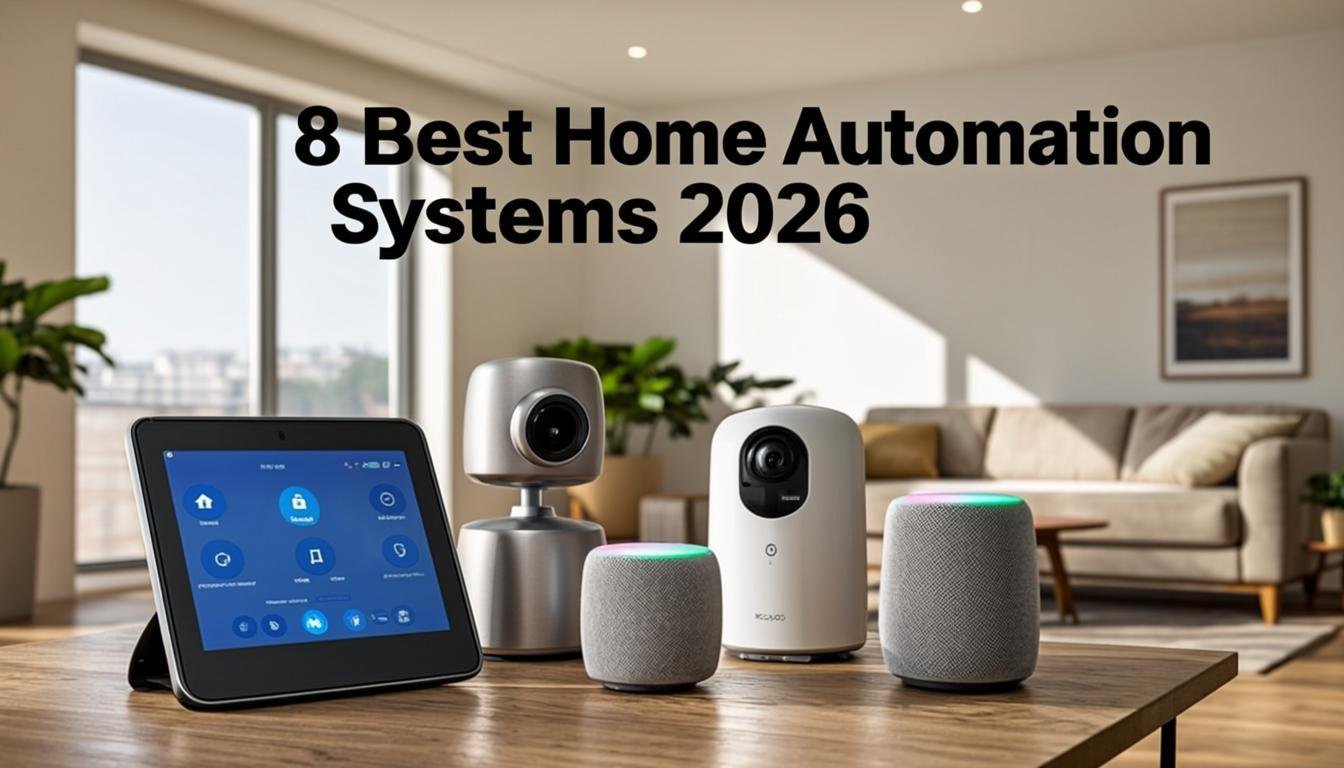
1. Google Nest Ecosystem
Google’s Nest ecosystem has become the most approachable whole-home system in 2026. The new Nest Hub Max 2 serves as an excellent central controller, and Google’s AI routines have gotten remarkably good at predicting what you want. My lights adjust before I even think about it. The thermostat knows my schedule better than I do.
The integration with Android phones is smooth, and Google Home has finally become a reliable app instead of a buggy mess. Nest cameras, doorbells, thermostats, and speakers all work together coherently.
My take: If you use Android and want a set-it-and-forget-it smart home, Google Nest is your best bet. I switched from Amazon’s ecosystem last year and the improvement in AI routine quality was immediately noticeable. Google just understands context better—when I say “goodnight,” it knows I mean lights off, doors locked, thermostat down, and white noise on. No configuration required.
2. Apple HomeKit (HomePod-Driven)
Apple’s smart home play has always been about privacy first, and in 2026, that’s finally paired with competitive functionality. The HomePod 3 handles on-device processing for most automations, meaning your data never leaves your house. Siri has improved dramatically—still not as conversational as Google Assistant, but far more reliable for home control commands.
Matter support means HomeKit now works with thousands of devices that previously required workarounds. If you’re all-in on Apple, this ecosystem has become genuinely compelling.
3. Amazon Alexa (Echo Hub System)
Amazon’s ecosystem remains the widest in terms of device compatibility. The Echo Hub is a solid wall-mounted control center, and Alexa’s third-party skill library is unmatched. However, privacy concerns persist—Amazon’s business model still relies on data, and that makes some people uncomfortable.
My take: Alexa is the pragmatic choice for maximum device compatibility on a budget. But I can’t shake the feeling that I’m trading privacy for convenience. If that trade-off doesn’t bother you, Alexa’s ecosystem is hard to beat for sheer breadth of supported devices.
4. Samsung SmartThings 2026
Samsung has quietly built one of the most capable smart home platforms. SmartThings now includes AI Energy Mode that genuinely saves money—it reduced my electricity bill by about 12% in three months by optimizing appliance schedules. The integration with Samsung appliances (refrigerators, washers, TVs) is a major advantage if you’re in their ecosystem.
5. Home Assistant (Open Source)
For the technically inclined, Home Assistant remains the most powerful smart home platform available—and it’s completely free. The 2026 releases have made installation and setup significantly easier, with a guided setup wizard and pre-built blueprints for common automations. You’ll need a dedicated device (a Raspberry Pi or mini PC), but the control and privacy are unmatched.
My take: I run Home Assistant alongside my Google Nest setup, and it’s incredible for complex automations that Google’s system can’t handle. But I wouldn’t recommend it as someone’s only smart home platform unless they enjoy tinkering. The learning curve is real, and troubleshooting requires patience. It’s the Linux of smart home platforms—powerful but not for everyone.
6. Hubitat Elevation
Hubitat occupies the sweet spot between consumer systems and full DIY platforms. It processes everything locally (no cloud dependency), supports Zigbee, Z-Wave, and Matter, and offers more customization than consumer hubs without requiring programming knowledge. For people who want reliability above all else, Hubitat delivers.
7. KNX (Professional Installation)
If you’re building or extensively renovating a home, KNX is the gold standard for professional-grade home automation systems 2026. It’s been the professional standard in Europe for decades and is growing in the US. Wired reliability, zero cloud dependency, and integration with every building system imaginable. It’s expensive—expect $10,000+ for a typical home—but it’s the only system that will still work perfectly in 20 years.
8. Xiaomi Smart Home Kit
The budget champion. Xiaomi’s ecosystem offers remarkable value—motion sensors for $12, smart plugs for $15, cameras for $25. The quality has improved significantly, and Matter support means they work with Google, Apple, and Amazon ecosystems. The trade-off is data privacy; Xiaomi’s data practices aren’t as transparent as Western competitors.
My take: I recommend Xiaomi for people who want to experiment with smart home tech without spending hundreds. Start with a $100 kit, see if you actually use the features, then invest in a more complete system if it adds value to your daily life. Too many people go all-in on day one and regret it.
Home Automation Systems 2026: Comparison Table
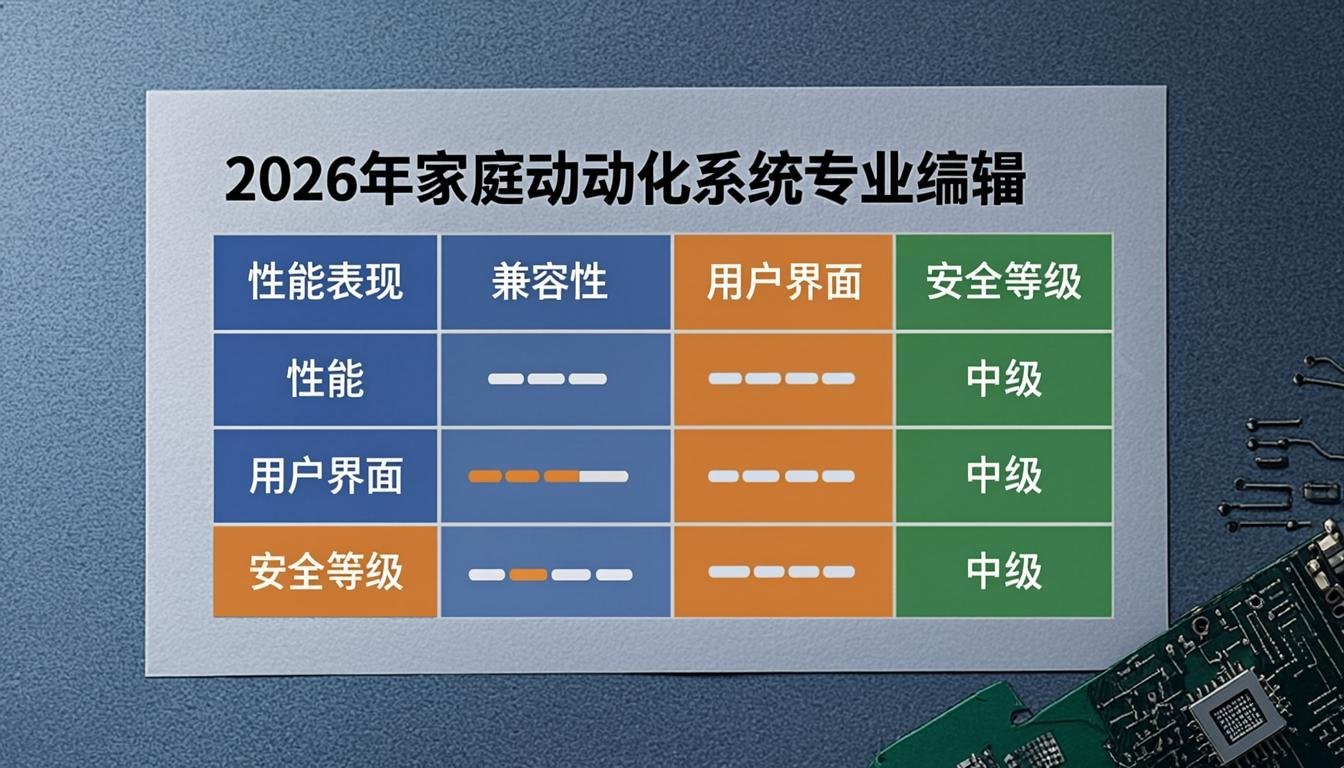
| System | Price Range | Ease of Setup | AI Routines | Privacy | Best For |
|---|---|---|---|---|---|
| Google Nest | $200-$3,000 | ★★★★★ | ★★★★★ | ★★★☆☆ | Android users |
| Apple HomeKit | $300-$4,000 | ★★★★☆ | ★★★★☆ | ★★★★★ | Privacy-first users |
| Amazon Alexa | $150-$2,500 | ★★★★★ | ★★★★☆ | ★★☆☆☆ | Budget + compatibility |
| Samsung SmartThings | $200-$3,500 | ★★★★☆ | ★★★★☆ | ★★★☆☆ | Samsung appliance owners |
| Home Assistant | Free (hardware $50+) | ★★☆☆☆ | ★★★★★ | ★★★★★ | Power users |
| Hubitat Elevation | $150 + devices | ★★★☆☆ | ★★★☆☆ | ★★★★★ | Reliability focus |
| KNX | $10,000+ | ★☆☆☆☆ | ★★★☆☆ | ★★★★★ | New construction |
| Xiaomi | $50-$500 | ★★★★☆ | ★★★☆☆ | ★★☆☆☆ | Budget starters |
2026: The Year Matter Finally Delivered

If you’ve been following smart home news, you’ve heard about Matter—the universal protocol that promises to make all smart home devices work together. After years of delays and half-baked implementations, Matter is finally delivering on its promise in 2026.
Here’s why it matters (pun intended): previously, choosing a smart home platform meant committing to one ecosystem. Google devices didn’t work with Apple HomeKit. Amazon Echo couldn’t control HomeKit accessories. You were locked in. Matter changes this by providing a common language that all platforms understand.
In practice, this means a Philips Hue bulb works with Google, Apple, Amazon, and Samsung simultaneously. A Yale smart lock responds to commands from any ecosystem. You can mix and match without worrying about compatibility.
My take: Matter is the single most important development in home automation systems 2026. It eliminates the lock-in problem that kept many people from investing in smart home technology. If you’re starting fresh, buy Matter-compatible devices exclusively. You’ll thank yourself when you inevitably switch platforms in a few years.
Discover AI tools that enhance your smart home in our free AI tools 2026 guide.
AI-Powered Routines vs. Manual Automations
The biggest shift in home automation systems 2026 isn’t new hardware—it’s AI-driven routines that learn your behavior instead of requiring manual programming.
Old-school automation: “If front door opens after 6 PM, turn on hallway lights to 50%.” This works, but it’s rigid and requires you to anticipate every scenario.
AI-powered routines: Your home observes that you typically arrive home between 5:30 and 6:30 PM, that you prefer soft lighting in the evening, and that you always lock the door within 10 minutes of arriving. It creates and adjusts automations automatically based on these patterns.
Google and Apple are leading here. Google’s Adaptive Routines have been running in my house for three months, and they’ve become noticeably better over time. The thermostat now adjusts 15 minutes before I arrive instead of when I walk through the door. The outdoor lights turn on based on actual sunset times and weather conditions rather than a fixed schedule.
My honest opinion: AI routines are the feature that finally makes smart homes feel smart rather than just automated. But I worry about what happens when the AI gets it wrong. Last week, Google decided I was on vacation because I hadn’t left the house in three days (I was working from home) and turned off all my scheduled routines. It took me 20 minutes to figure out why my house was behaving strangely. The AI needs a “no, I’m not on vacation” button.
Explore how AI is shaping content in our AI generated content 2026 article.
The Security Question You Can’t Ignore
Every home automation systems 2026 review needs to address security honestly. Your smart home knows intimate details about your life: when you’re home, when you’re away, your daily routines, even what rooms you’re in. That data is valuable, and not just to you.
According to BBC News, smart home device hacks increased 400% between 2023 and 2025, with default passwords and unpatched firmware being the primary entry points.
Here’s my security checklist for any smart home setup:
- Change every default password immediately. This sounds obvious, but you’d be amazed how many people skip it.
- Put IoT devices on a separate WiFi network. Most modern routers support guest networks or VLANs. Isolate your smart devices so a compromised camera can’t access your laptop.
- Enable two-factor authentication on your smart home accounts.
- Choose local processing when available. Home Assistant, Hubitat, and Apple HomeKit process most data on-device rather than in the cloud.
- Update firmware regularly. Set a monthly reminder to check for device updates.
My take: I’m comfortable with Google Nest because I’ve accepted the privacy trade-off. But I understand why many people aren’t. If privacy is a top priority, build your system around Apple HomeKit or Home Assistant—both keep your data local by default. The convenience-privacy spectrum is real, and you need to decide where you fall on it before buying anything.
Stay updated with our Technology category for the latest security news.
Building a Smart Home on a Budget
You don’t need to spend thousands to get started with home automation systems 2026. Here’s a starter kit for under $200 that covers the basics:
- Smart speaker/hub: Google Nest Mini or Echo Dot ($49)
- Smart bulbs (4-pack): Wyze or Sengled Matter bulbs ($35)
- Smart plug (2-pack): TP-Link Tapo ($20)
- Smart motion sensor: Aqara Motion Sensor ($15)
- Smart door/window sensor: Aqara Door Sensor ($12)
Total: ~$131. That’s enough to automate your lights, monitor entry points, and control small appliances with voice or schedules. Add devices as you discover what’s actually useful in your daily routine.
My take: Start small, add gradually. The worst thing you can do is buy 30 smart devices at once and spend a weekend setting them all up. You’ll be overwhelmed and half of them won’t work the way you expected. Buy one category at a time—lights first, then thermostat, then security—master each one, then expand.
Find more budget tech in our guide to the best budget smartphones 2026.
Frequently Asked Questions
What is the best home automation system for beginners?
Google Nest is the most beginner-friendly home automation systems 2026 option. The setup is guided, the app is intuitive, and AI routines work well out of the box. Start with a Nest Hub and a few smart bulbs, then expand from there.
Do home automation systems increase home value?
Yes, but modestly. A well-implemented smart home system can increase home value by 3-5%, according to real estate surveys. Professional installations (KNX, Control4) add more value than DIY setups. However, a poorly implemented system can actually reduce appeal—buyers don’t want to inherit a confusing smart home they can’t figure out.
Can I mix different smart home brands?
Yes, in 2026, thanks to the Matter protocol. Matter-compatible devices from different brands work together regardless of which ecosystem you use. Look for the Matter logo on product packaging to ensure cross-compatibility.
What happens if my internet goes down?
It depends on your setup. Cloud-dependent systems (Google Nest, Amazon Alexa) lose most functionality without internet. Local processing systems (Home Assistant, Hubitat, Apple HomeKit with HomePod) continue to work for basic automations. Thread and Matter devices can communicate locally even without internet.
Is professional installation worth it?
For complex setups (whole-home audio, motorized blinds, security systems), professional installation is worth the cost. For basic automation (lights, thermostat, cameras), DIY is sufficient and much cheaper. Most people fall somewhere in between—consider hiring a pro for specific projects while handling simpler tasks yourself.
Final Thoughts
The home automation systems 2026 landscape is the best it’s ever been. Matter has solved the compatibility nightmare. AI routines have made smart homes genuinely smart. And the price of entry has dropped to the point where almost anyone can afford to start.
My strongest advice: resist the urge to automate everything at once. Start with the one thing that frustrates you daily—whether that’s coming home to a dark house or forgetting to adjust the thermostat—and solve that first. Build from there, one device at a time. A smart home should serve you, not the other way around.
What’s the one smart home device you can’t live without? Or what’s kept you from trying home automation? Share your thoughts in the comments—I respond to every one.
About the Author: The NowGoTrending team has been testing smart home technology since 2020. We install every system we review in our own homes for a minimum of 60 days. No freebies, no sponsored placements—just honest experience.
Disclaimer: This article is for informational purposes only. While we strive for accuracy, details may change. NowGoTrending may earn commissions from affiliate links at no extra cost to you.
💡 Our Top Picks — Best Deals Available Now
We may earn a commission if you purchase through these links. Affiliate Disclosure