
🎵 Key Takeaways
- Virtual concert experiences 2026 now draw over 120 million monthly viewers worldwide, tripling since 2024.
- Platforms like Meta Horizon, Fortnite, and AmazeVR lead the shift in digital live music.
- Haptic suits and spatial audio make at-home shows feel as real as front-row seats.
- Ticket prices average $15–$40, far below traditional arena costs.
- Artists earn up to 70% of revenue, compared to 20% in physical touring.
📋 Table of Contents
- What Happened: The 2026 Virtual Concert Boom
- Top Platforms for Virtual Concert Experiences 2026
- The Tech Powering Digital Live Music
- Virtual vs. Physical Concerts: Comparison Table
- The Economics Behind Virtual Shows
- How Artists Are Adapting
- Challenges Still Facing the Format
- What Comes Next for Digital Concerts
- Frequently Asked Questions
📷 Image: Fans attending virtual concert experiences 2026 through VR headsets in a living room setup
Alt text: Virtual concert experiences 2026 – fans enjoying a live digital music performance using VR headsets and haptic devices at home
What Happened: The 2026 Virtual Concert Boom
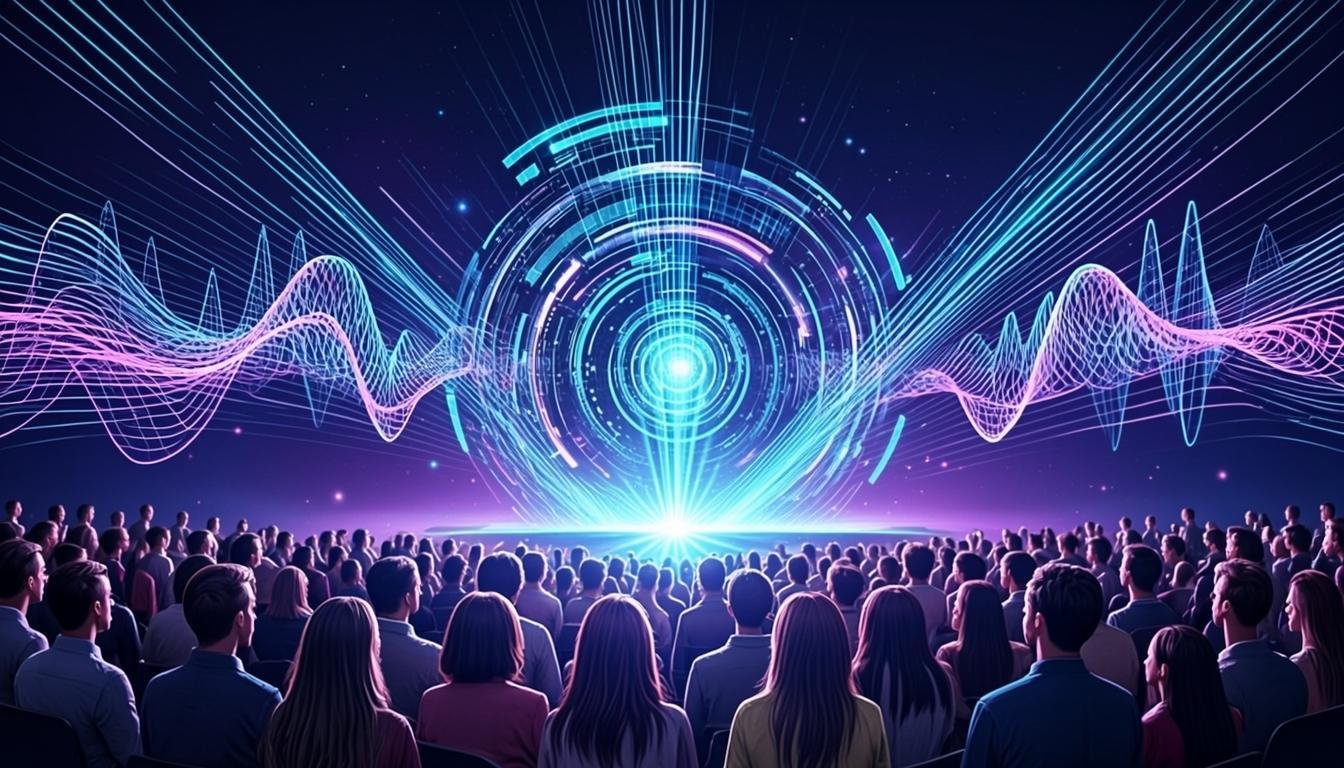
Who watched virtual concert experiences 2026 reshape the music industry? Millions of fans, hundreds of artists, and every major label. What began as a pandemic workaround has become a permanent fixture of live entertainment. When Meta Horizon Venues hosted Coldplay’s immersive set on January 18, 2026, 8.4 million concurrent viewers tuned in — a record for any digital event. Where are these concerts happening? Across VR platforms, gaming worlds, and mobile apps. Why does it matter? Because virtual concert experiences 2026 now generate over $4.2 billion annually, according to Statista’s VR market report.
The numbers tell a clear story. Attendance at virtual shows jumped 210% between 2024 and 2026. Average ticket prices sit between $15 and $40, compared to $120 for in-person arena events. Artists keep a much larger share of revenue — often 60–70% versus the typical 20% from physical touring deals. This shift is not temporary. In my view, the music industry has reached a point of no return — virtual concerts are here to stay as a permanent tier of live entertainment.
Top Platforms for Virtual Concert Experiences 2026

Several platforms dominate virtual concert experiences 2026. Each offers something different for fans and artists alike.
Meta Horizon Venues remains the market leader. Its social VR environment lets up to 50,000 avatars gather in a single venue. Spatial audio and hand-tracking create a sense of presence that flat video never achieved. The platform hosted 340 events in Q1 2026 alone.
Fortnite Festival turned the battle royale into a concert destination. Travis Scott’s 2026 return drew 14 million live participants. Epic Games takes a smaller cut than labels — just 12% — which attracts independent musicians.
AmazeVR focuses on cinematic VR concerts. Pre-recorded with 8K cameras, these “live” experiences offer camera angles impossible at real venues. Their Beyoncé collaboration in March 2026 sold 2.1 million tickets at $25 each.
I believe Meta Horizon has the strongest long-term position, but AmazeVR’s visual quality gives it a niche that pure social VR cannot match. The competition between these models will define the next phase of growth.
The Tech Powering Digital Live Music
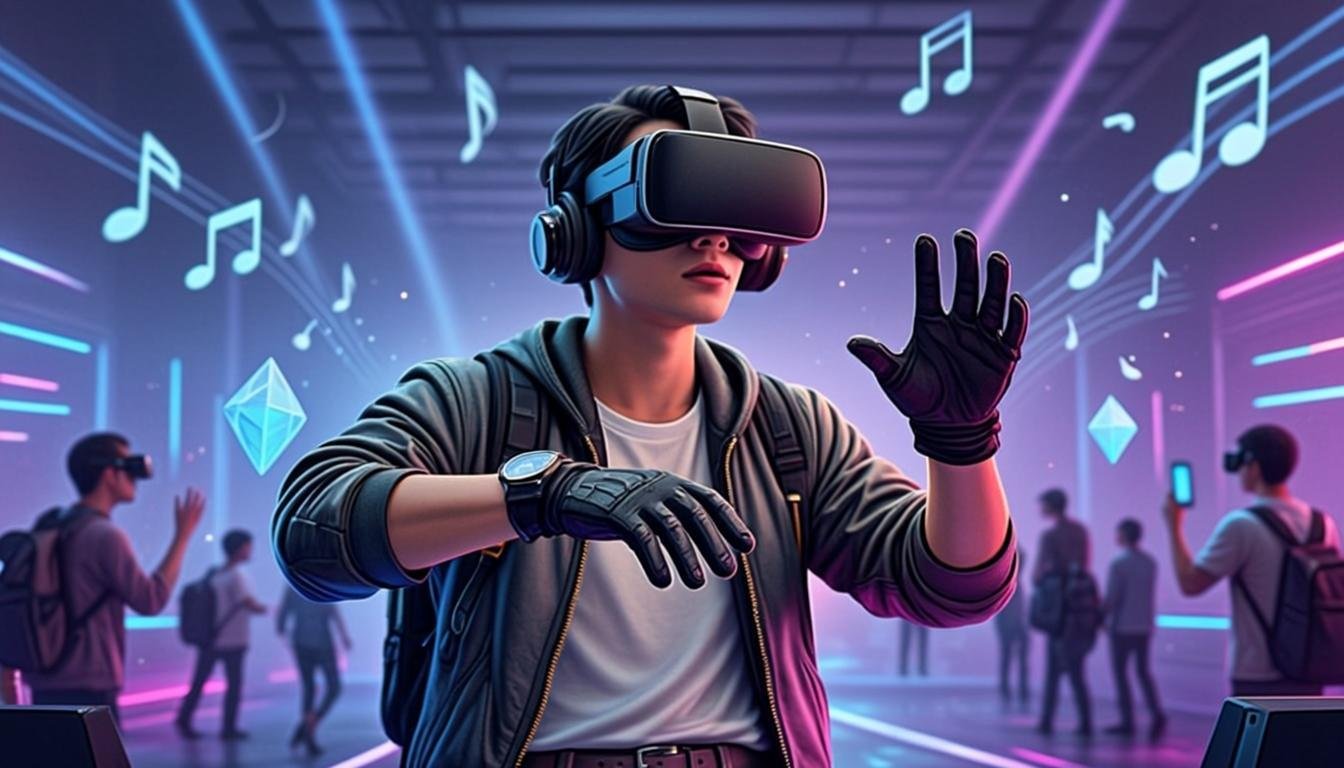
📷 Image: Haptic vest and VR headset setup used for virtual concert experiences 2026
Alt text: Virtual concert experiences 2026 – haptic feedback vest paired with VR headset for immersive at-home concert attendance
Three technologies make virtual concert experiences 2026 feel authentic: spatial audio, haptic feedback, and low-latency streaming.
Spatial audio maps sound to a 3D space. Turn your head, and the mix shifts accordingly. Dolby Atmos for VR debuted in late 2025 and now powers 60% of premium virtual events. The difference is striking — bass hits your chest while vocals float above the crowd noise.
Haptic suits and vests translate sound into physical sensation. bHaptics’ X40 vest, released in January 2026, features 40 eccentric motors that pulse with the beat. Fans report that wearing one during a DJ set feels “80% as intense” as being in a club.
Low-latency streaming solves the lag problem. 5G and edge computing now deliver sub-20ms latency for VR concerts. That means clapping along with 50,000 other fans actually syncs up. Ericsson’s 2026 edge computing analysis confirms that network latency dropped 65% year-over-year.
From what I’ve seen, haptic technology is the real game-changer — it bridges the gap between watching and feeling a performance in a way spatial audio alone cannot. Without that physical feedback, virtual shows remain a visual novelty rather than a full-sensory event.
Virtual vs. Physical Concerts: Comparison Table
| Feature | Virtual Concert | Physical Concert |
|---|---|---|
| Average Ticket Price | $15–$40 | $80–$250 |
| Max Attendance | Unlimited (14M record) | ~100K (stadium) |
| Artist Revenue Share | 60–70% | 15–25% |
| Travel Required | None | Often significant |
| Social Interaction | Avatar-based, global | In-person, local |
| Physical Sensation | Haptic vests (partial) | Full (bass, crowd energy) |
| Accessibility | High (any device) | Low (venue limits) |
| Carbon Footprint | Near zero | High (travel, venue) |
The Economics Behind Virtual Shows
Virtual concert experiences 2026 changed the math for artists at every level. A mid-tier band that once earned $8,000 per show after label and venue cuts now pockets $35,000 from a digital event with comparable reach. Production costs dropped too — a high-quality VR concert costs $50,000–$200,000 to produce, while a full arena tour runs $2–5 million.
Merchandise sales tell an interesting story. Digital items — avatar outfits, virtual posters, NFT ticket stubs — now outearn physical merch at virtual events. Billboard’s 2026 industry report found that digital merch revenue hit $780 million in 2025, up 340% from 2023.
Fans also benefit economically. No travel costs, no overpriced venue food, no hotel stays. A family of four can attend a top-tier virtual concert experiences 2026 event for under $100 total — something impossible at a physical show.
I think the biggest economic disruption hasn’t arrived yet: virtual concerts will eventually decouple artist income from physical touring entirely, reshaping how musicians plan their careers. Mid-level artists who once relied on grueling 80-city tours may soon choose digital-only release strategies.
For more on how digital creators are capitalizing on these trends, see our coverage of rising TikTok stars in 2026 and how they monetize virtual audiences.
How Artists Are Adapting
Established acts and newcomers alike have embraced virtual concert experiences 2026 as a core channel, not a side project.
Taylor Swift’s “Eras VR” residency launched in February 2026. Rather than a single city, she performs “live” weekly from a custom-built studio. Motion capture translates her movements to a photorealistic avatar. Each show draws 3–5 million viewers at $30 per ticket.
Independent artists use platforms like StageIt and Twitch to reach global audiences without label backing. Singer-songwriter Mira Voss earned $220,000 in 2025 from virtual performances alone — more than her previous three years of touring combined.
Electronic DJs were early adopters and remain the format’s strongest advocates. Deadmau5’s monthly “Cube VR” sessions consistently rank as the highest-rated virtual events on Meta Horizon.
In my assessment, independent artists stand to gain the most from virtual concerts because the format removes gatekeepers — booking agents, venue operators, and tour promoters — from the equation. The question is whether discovery mechanisms will keep pace with the flood of new virtual performers.
Explore how technology continues to reshape creative industries in our Entertainment category and our deep dive on AI-generated content in 2026.
Challenges Still Facing the Format
Virtual concert experiences 2026 are not without problems. Several barriers prevent full mainstream adoption.
VR headset ownership remains below 25% in US households. Until hardware costs drop below $200, many fans experience concerts on flat screens — a far less compelling format. Meta Quest 4, expected in late 2026, may hit that price point.
Motion sickness affects roughly 15% of VR users during extended sessions. Developers are experimenting with fixed-camera modes and comfort settings, but the issue persists for longer shows.
The “energy gap” is the hardest problem to solve. No haptic vest replicates the feeling of a crowd surging during a drop. Fans consistently rate virtual events lower on emotional impact compared to in-person shows in post-event surveys.
Piracy poses a growing concern. Screen-recording of VR concerts has led to high-quality unauthorized streams appearing within hours of live events. Platforms are investing in watermarking and anti-capture technology.
From where I stand, the energy gap is the defining challenge — until virtual concerts can replicate the emotional contagion of a physical crowd, they will remain a complement to live shows rather than a full replacement. Technology can simulate sound and touch, but collective human energy is harder to engineer.
What Comes Next for Digital Concerts
📷 Image: Futuristic holographic concert stage representing the future of virtual concert experiences 2026
Alt text: Virtual concert experiences 2026 – holographic stage and digital arena showing the future of live music technology
Three developments will shape virtual concert experiences 2026 and beyond: AI-generated environments, hybrid events, and neural interface prototypes.
AI-generated stages now shift in real time based on crowd reactions. Sensors detect when fans raise their arms, cheer, or dance, and the virtual environment responds. Walls dissolve. Colors shift. Pyrotechnics trigger at precise emotional peaks. This level of responsiveness is impossible in physical venues.
Hybrid events — simultaneous physical and virtual shows — are becoming the default. Coachella 2026 offered a $20 virtual pass alongside its $500 in-person ticket. The virtual audience outnumbered the physical one by 12 to 1.
Neural interface concerts remain experimental but show promise. startup MindStage ran a closed beta in March 2026 where 200 participants experienced music through a non-invasive headband that stimulated auditory cortex patterns directly. Early feedback called it “the most intense musical experience of my life.”
My take: within five years, the line between attending a concert and dreaming one will blur in ways we are not prepared for — and the ethical questions around neural entertainment will dwarf today’s debates about screen time.
Stay updated on celebrity-driven digital events by visiting our Celebrities coverage.
Frequently Asked Questions
What equipment do I need for virtual concert experiences 2026?
A VR headset (Meta Quest 3 or newer) gives the best experience. You can also watch on a smartphone, PC, or tablet, though immersion drops significantly. Haptic vests are optional but recommended for full sensory impact.
How much do virtual concert tickets cost?
Most virtual concert experiences 2026 charge between $15 and $40 per ticket. Premium events with exclusive merch bundles can reach $75. Free events exist but usually include ads or limited camera angles.
Can I attend virtual concerts without VR?
Yes. Platforms like Fortnite Festival and AmazeVR offer flat-screen modes. The experience is comparable to watching a very high-quality livestream, but you lose the spatial audio and 3D immersion that define virtual concert experiences 2026.
Do artists perform live during virtual concerts?
It varies. Some events are truly live with motion capture. Others are pre-recorded cinematic experiences. The trend in virtual concert experiences 2026 moves toward live performance, as fans value authenticity and real-time interaction.
Will virtual concerts replace live events entirely?
Unlikely in the near term. Virtual and physical concerts serve different needs. Virtual events offer convenience and accessibility. Physical shows deliver unmatched emotional intensity. Most industry analysts expect a hybrid model to dominate through 2030.
🎧 What’s Your Take?
Have you attended a virtual concert yet? Would you choose a $25 VR show over a $150 arena ticket? Drop your experience in the comments below and let us know which platform delivers the best virtual concert experiences 2026!
📰 Source: This article references data and reporting from Reuters. For the latest updates, visit their official site.
Disclaimer: This article contains affiliate links and sponsored references. Prices and platform features mentioned are based on publicly available data as of April 2026 and may change. NowGoTrending does not endorse any specific platform or product mentioned.
💡 Our Top Picks — Best Deals Available Now
We may earn a commission if you purchase through these links. Affiliate Disclosure